Industries · Conferences
Event Staffing for Conferences
A conference is decided in the first hour: badges, queues, speaker arrivals and parallel tracks all land at once. EventEdge Staffing supplies registration desk teams, session crew, hospitality staff and speaker escorts for single-day and multi-day conferences. We build the roster from your agenda, not from a generic template.
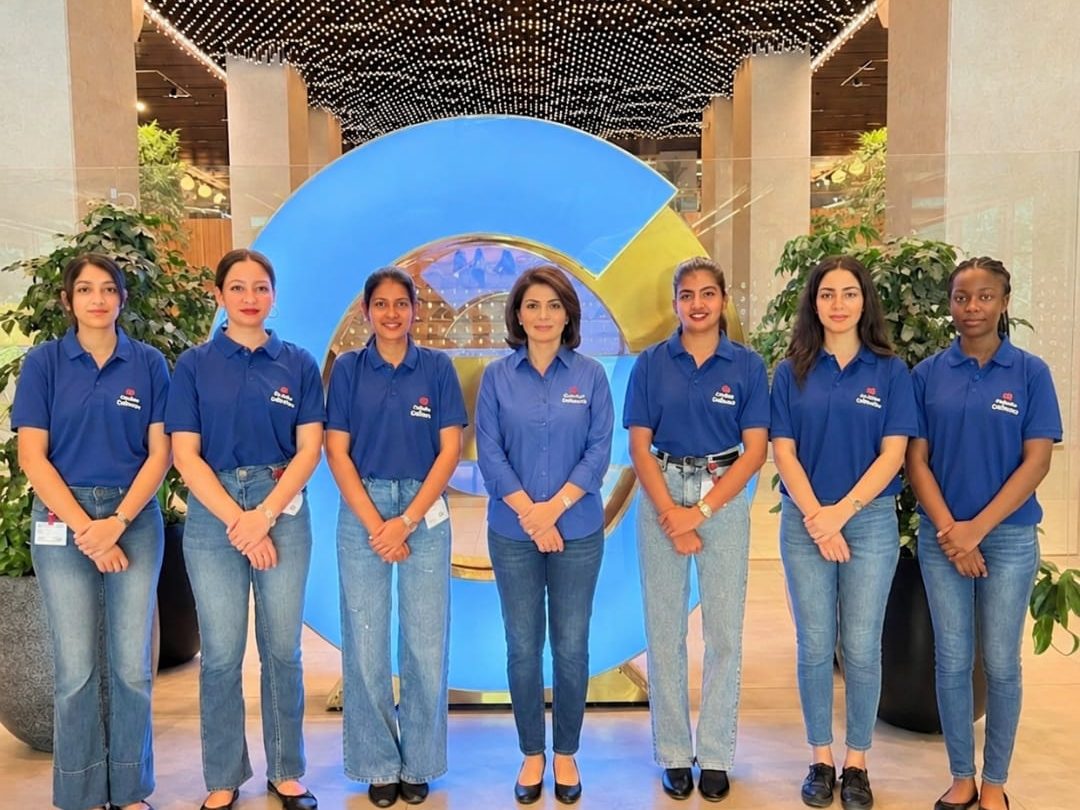
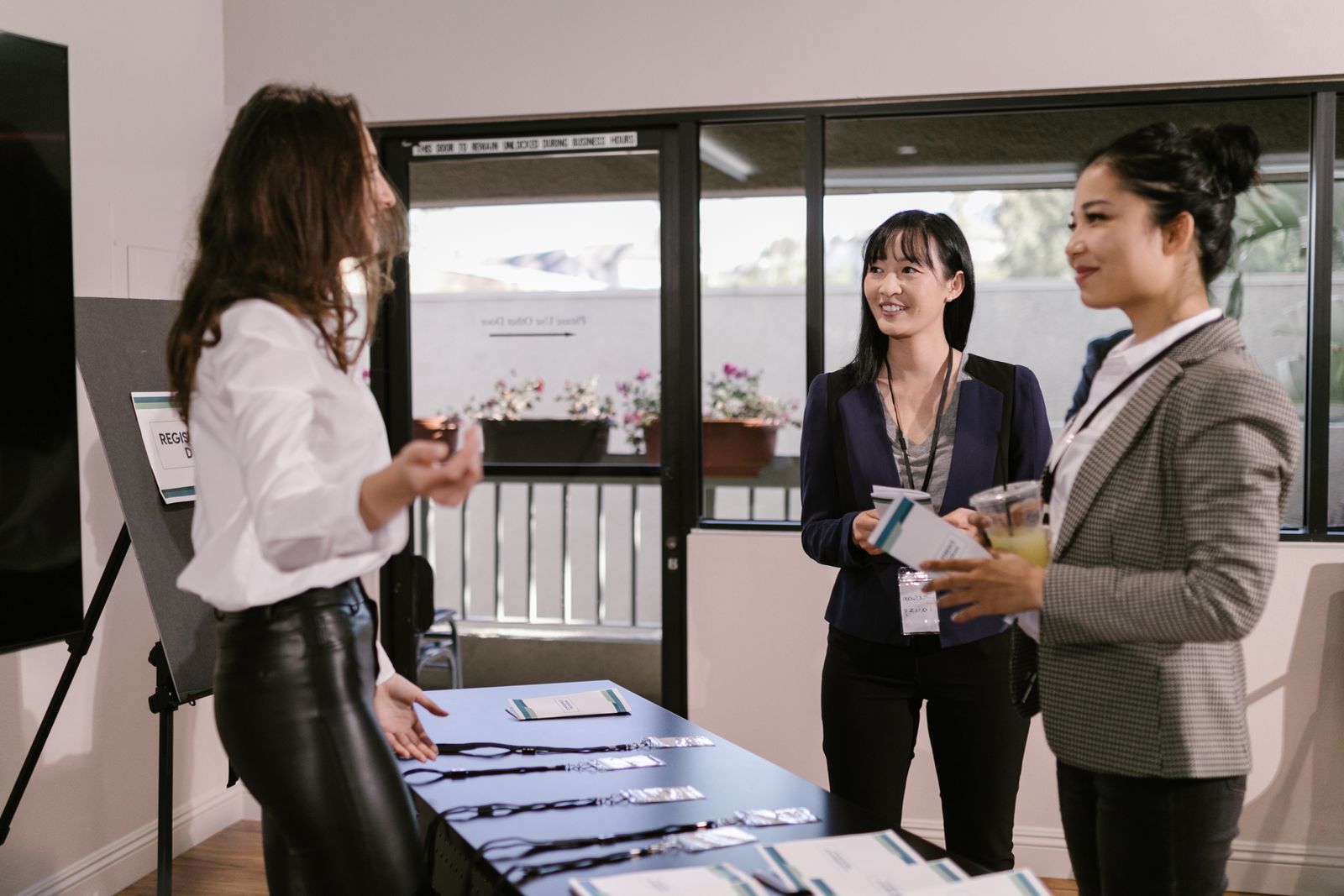
Staffing requirements for conferences
- Multi-day rosters with shift rotation so the same crew are not worked flat across three days.
- Registration desk teams sized to the day-one arrival peak, when most delegates check in.
- Room-wise ushers for each track so sessions start with seats filled and doors managed.
- Speaker escorts who can move a panellist from green room to stage without crossing the delegate queue.
- Hospitality crew timed to tea, lunch and closing breaks, when the whole venue moves at once.
- Handover notes between shifts so the second-day crew know what changed on day one.
Operational challenges
- Day-one check-in crushMost delegates register in the first 45 minutes of day one, and a desk team that looks generous on paper is often too small at that exact moment.
- Parallel tracksThree tracks running together means crew cannot simply be pooled; each room needs its own usher and its own start discipline.
- Multi-day fatigueThe same crew on duty for three consecutive days lose sharpness by day three, which is when the closing plenary matters most.
- Speaker timing driftPanellists arrive late or early and the escort team has to re-sequence stage calls without disrupting the running room.
- Break-time surgesAt every tea and lunch break the entire delegate base moves through the same corridors and service counters within minutes.
- Sponsor and exhibitor queriesSponsors expect a visible point of contact at the desk, and mixing those queries into the delegate queue slows everyone down.
How EventEdge supports the event
- Agenda-led rosteringWe build the crew roster track by track from your agenda, so each room has named people and each shift has a defined handover point.
- Shift rotation planningFor multi-day conferences we plan rotation across days and breaks so crew stay sharp through to the closing session.
- Separate enquiry lanesRegistration, sponsor enquiries and press or VIP check-in are set up as distinct lanes with their own crew, so no single queue absorbs everything.
- Green room to stage escortingSpeaker escorts work to a stage-call list and hold a quiet route between the green room, the wings and the platform.
- Break-time redeploymentCrew move from desk and track duties to corridor and service support before each scheduled break, then return to their positions.
- Briefed second-day crewHandover notes from day one are used to brief new or returning crew, so last-minute changes are known before doors open.
Where conference staffing usually goes wrong
Most conference staffing problems trace back to sizing the team against the delegate total instead of the arrival window. A 600-delegate conference can need 60 percent of its desk team in the first 45 minutes and almost none after lunch.
The second common failure is treating parallel tracks as one pool. When two rooms start on the same minute, crew cannot cover both without someone arriving late.
- Desk team sized to the day-one peak
- One named usher per track room
- Separate lanes for VIP, press and sponsor enquiries
- Break-time corridor and counter support
- Clear shift handover on multi-day events
Roles a conference crew covers
A conference deployment is usually a mix of four jobs: getting delegates registered, keeping rooms full and on schedule, moving speakers, and handling food and beverage peaks.
We assign crew to these jobs by name and position before the event, so no one is guessing their post on the morning.
What makes the briefing useful
A conference brief is mostly a list of timings. The sharper the timings you share, the tighter the deployment we can plan.
Once the timings are confirmed we share a duty sheet listing each position and reporting time, so your committee and the venue team are working from the same document.
- Day-wise agenda with session start and end times
- Number of tracks, rooms and seating capacity in each
- Delegate count and when most of them are expected
- Speaker, panellist and chief guest list with arrival times
- Badge and registration process you have chosen
- Dress code, reporting time and venue security access
Frequently asked
Can you staff a three-day conference?
Yes. We roster crew across multiple days with planned rotation and shift handovers, so coverage holds up on day three as well as day one.
Do you provide speaker escorts and green room support?
Yes. Speaker and panellist escorting is handled by our guest relations and VVIP team, working from your stage-call list.
How early should we brief you before a conference?
The earlier the better, but we also take on short-notice requirements and can confirm availability once we have your agenda and headcount. We have 24-hour deployment capability.
Do your crew handle delegate badge printing?
Our registration teams run badge issue, verification and queue flow. We work with the printing method and data you provide.
Can you supply crew in more than one city for a roadshow series?
Yes. We have live coverage in Bengaluru, Chennai, Mumbai, Delhi, Hyderabad and Kochi and can staff consecutive events across cities.
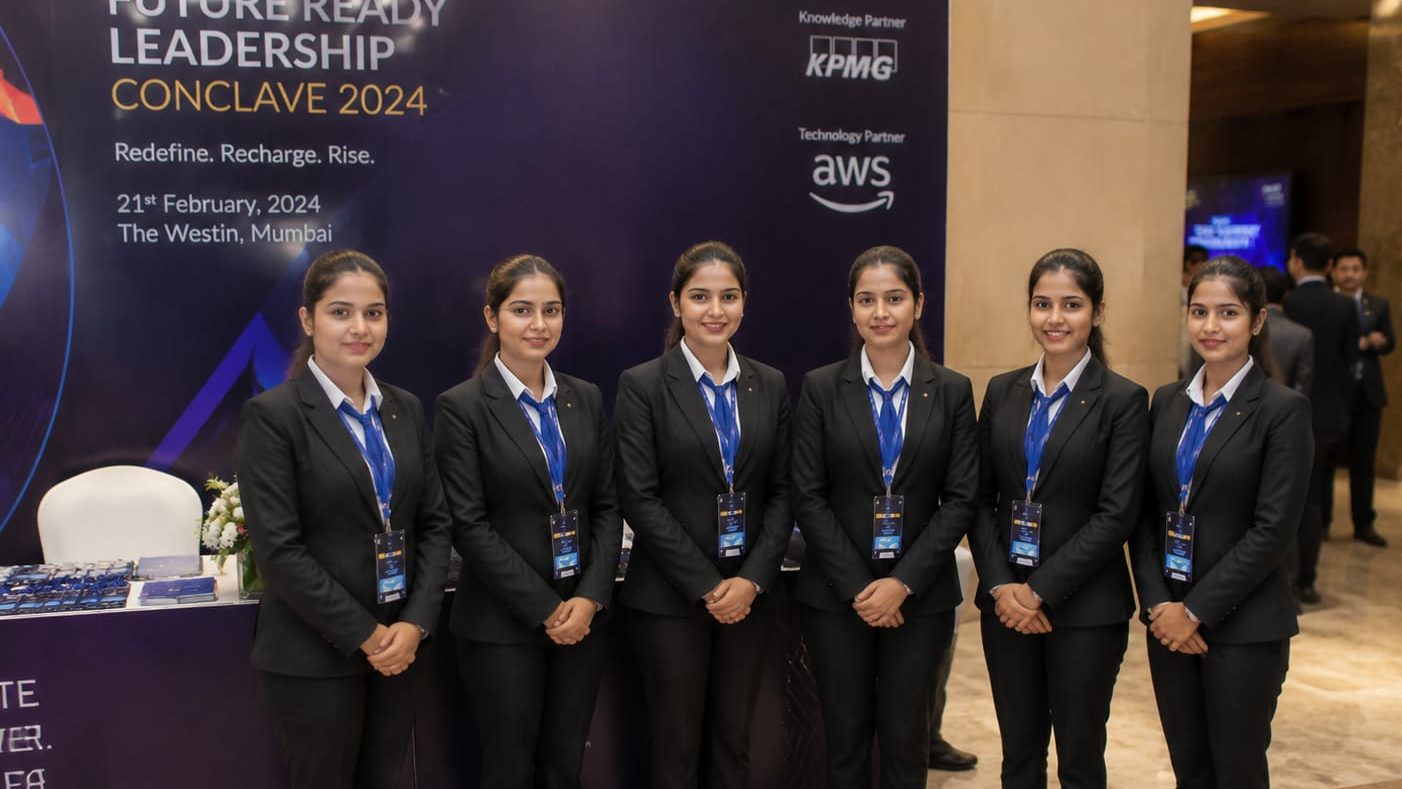
Crews like these
Real event work.
See the full portfolio by event type.
View the portfolio