What drives event staffing cost in Bangalore
Event staffing cost in Bangalore is driven by seven factors: the roles you need, the shift length, the headcount, the number of days, the venue's location and access, the scope of briefing and supervision, and how much lead time you give the agency. Price per person, per day, and every one of those inputs moves the number.
That is why a single headline rate is not a useful way to plan a budget. A three-person registration team for a four-hour morning is a different commercial proposition from a thirty-person crew across a three-day conference with overnight security cover and a dedicated coordinator.
The practical approach is to define the requirement precisely, then ask for an itemised quotation mapped to roles and days. That way you can see the effect of each change instead of negotiating one opaque lump sum.
Role mix is the biggest variable
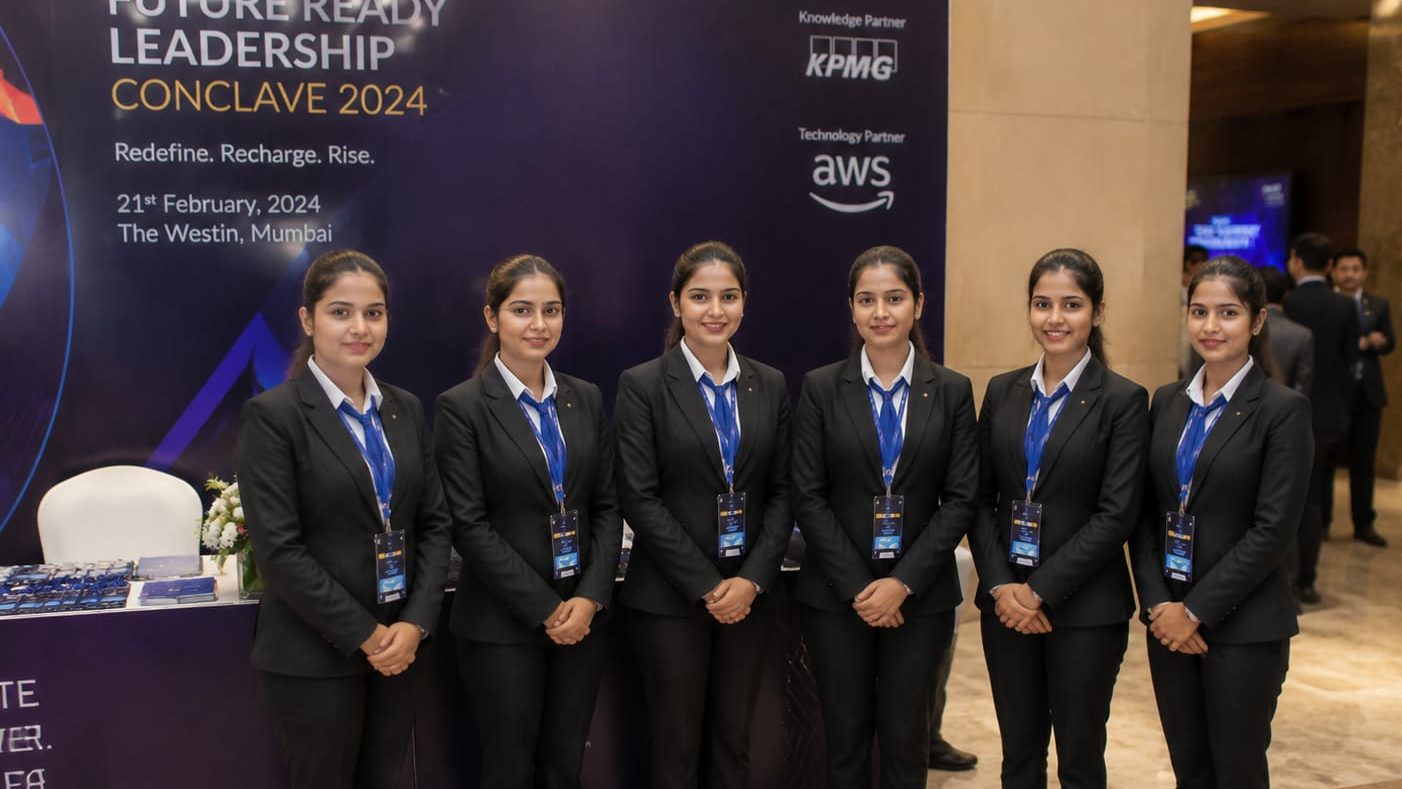
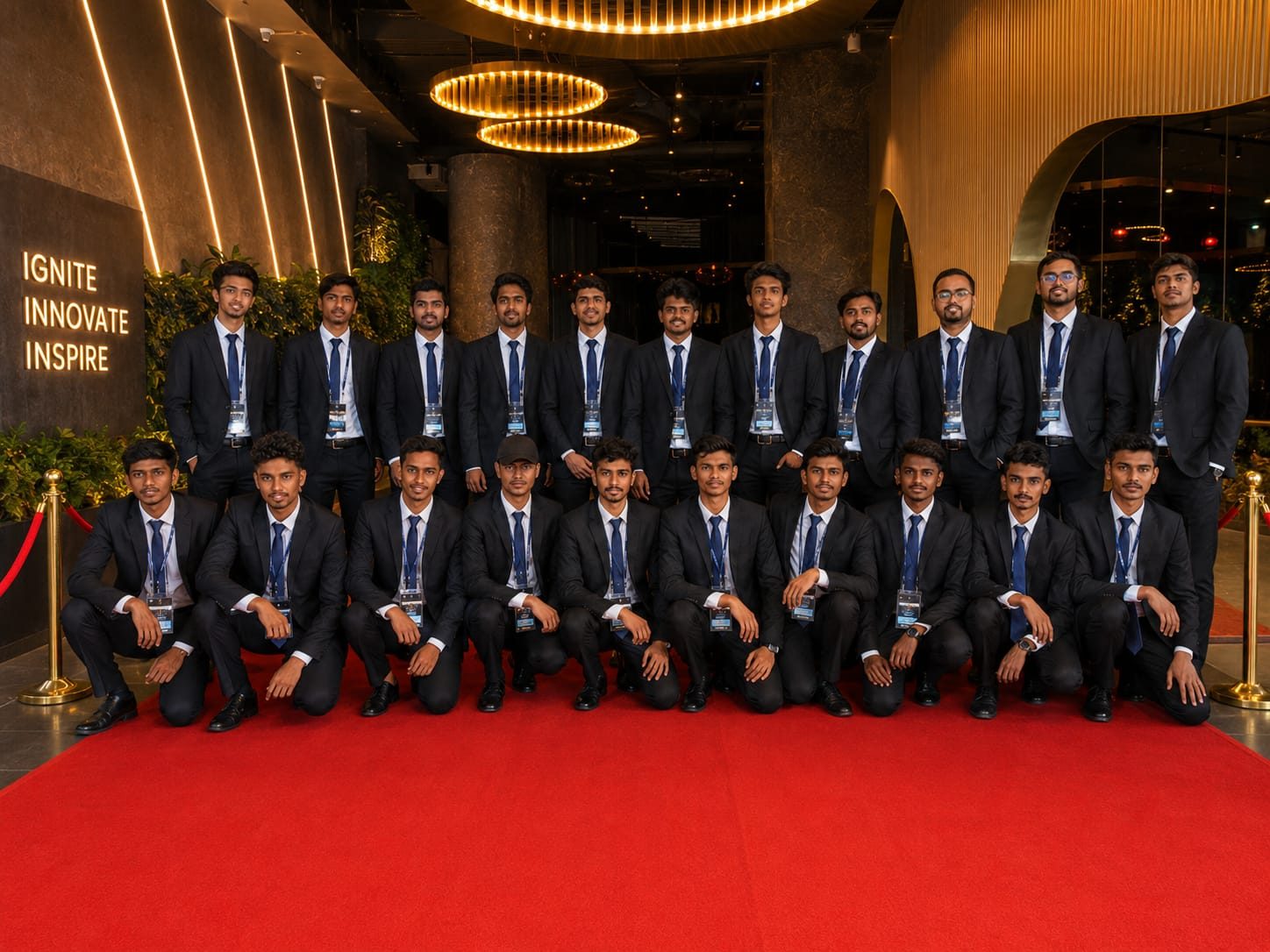
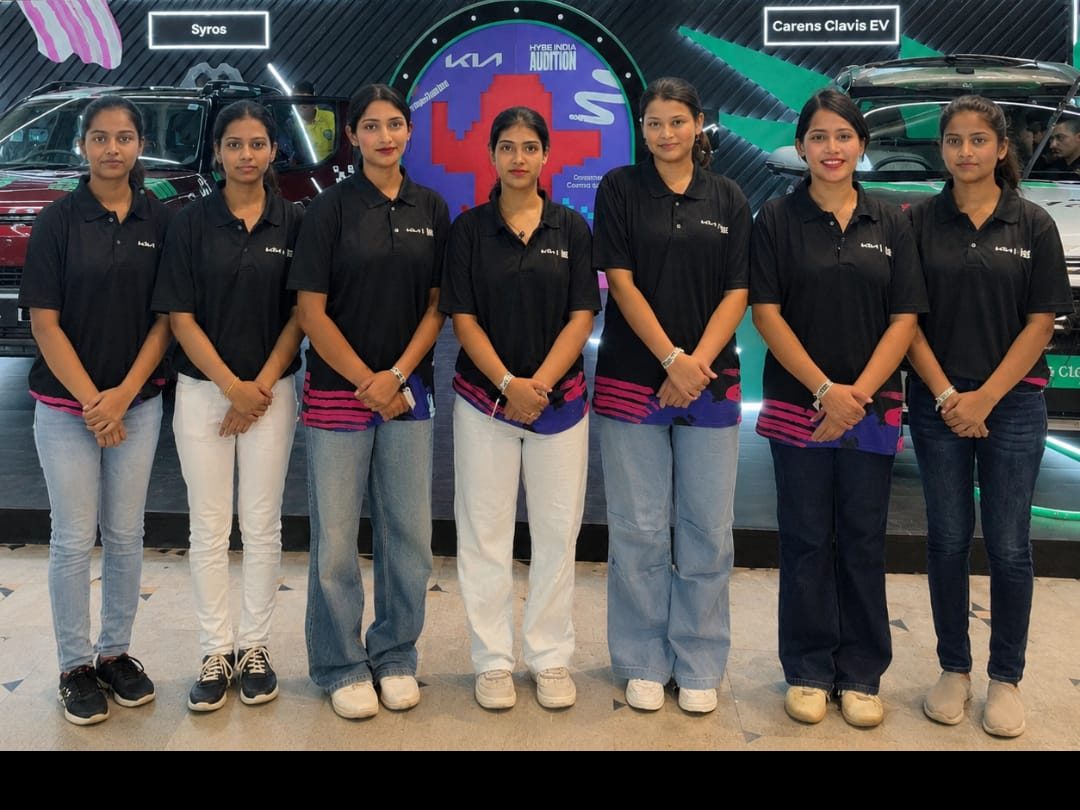
Different roles carry different rates. A host, an anchor or a guest relations and VVIP handler is a senior, experienced position. General event crew, volunteers and crowd marshals sit at a different level, and registration desk teams, hospitality staff and valet crew sit somewhere between them depending on the skill and appearance standard required.
Role mix also affects how many people you need to supervise. A crew of fifteen across five roles requires more coordination than fifteen crew doing one job, and that supervision time belongs in the quotation.
When you build the requirement, list each role on its own line with its own headcount. Bundling roles into a single number is the fastest way to lose visibility on what you are actually paying for.
- Hosts and anchors — senior, script-driven stage roles
- Guest relations and VVIP handling — protocol and discretion
- Registration desk teams — throughput and accuracy
- Hospitality staff — service standard and lounge cover
- Brand promoters — pitch quality and lead capture
- Crowd management and volunteers — volume roles
- Valet crew for arrival and parking flow
City, venue and travel
Bangalore is a large, spread-out city and travel time is a real cost input. A venue in the central business district is not the same deployment as one on the outer ring road, a resort on the city's edge or a venue in a neighbouring district.
Distance affects two things: crew travel cost and reporting reliability. A crew reporting at 6am for a venue an hour and a half away has a materially higher chance of late arrival than one reporting to a venue fifteen minutes from where the bench sits.
For events outside Bangalore, coverage operates from the same model across Chennai, Mumbai, Delhi, Hyderabad and Kerala. Venue location should always be part of the brief, not something discovered after the quotation.
Shift length and working hours
Shifts are priced by duration and by the hours in which they fall. A six-hour morning deployment, a twelve-hour show day and an overnight shift are three different assignments, because crew availability, fatigue and transport all change.
Long shifts also require relief cover. If a position must be manned continuously for twelve hours, the roster needs more people than the position count, and that shows up in the headcount line rather than as a hidden addition.
Define the shift as on-site hours, including briefing and set-up time. A crew asked to arrive at 6am for a 9am opening is working a longer shift than the guest-facing programme suggests.
Confirm whether the crew supports set-up and move-out as well. Those hours are worked even though no guest ever sees them, and they are the first thing buyers forget to specify.
- Reporting time versus guest-facing start time
- Set-up and move-out support
- Overnight, split and extended shifts
- Break cover across a twelve-hour day
Headcount, days and multi-day shows
Volume changes the shape of the cost, though not always in the direction buyers expect. Small crews carry a relatively higher share of coordination and setup cost per person. Large crews benefit from scale, but need more supervision.
Multi-day events spread the fixed elements — briefing, uniform issue and planning — across more days, which usually improves the per-day picture. They also introduce rotation needs, because the same crew cannot be deployed at full intensity for several consecutive days without relief.
The table below shows why day-wise planning matters more than a flat per-day assumption.
A day-wise requirement also protects you commercially. If you book one flat crew for a five-day show and then need extra hands only on the opening day, you either pay for the extra crew every day or renegotiate mid-event. Splitting the requirement by day keeps the cost tied to what the event actually needs.
| Cost driver | What changes it | What to specify in the brief |
|---|---|---|
| Role mix | Seniority and skill of each position | Each role listed separately with headcount |
| City and venue | Travel distance and reporting reliability | Full venue address and nearest landmark |
| Shift length | Hours on site and time of day | Reporting, opening and closing times |
| Headcount | Volume plus supervision ratio | Total crew and crew-to-supervisor ratio |
| Number of days | Fixed costs spread across days | Day-wise requirement, including build-up |
| Briefing and supervision scope | Depth of briefing and on-site management | Coordinator required, and briefing depth |
| Lead time | Time available to source and brief | Confirmed date and confirmation date |
| Dress and skill standard | Uniform, language and appearance norms | Dress code and language requirements |
Briefing and supervision scope
The difference between a list of names and a briefed crew is the part of the service you actually feel on event day, and it is priced in. Recruitment, verification, role cards, venue notes, uniform issue and a pre-deployment briefing are all work performed before the shift begins.
On-site supervision is the second element. A coordinator who holds the run-of-show, redeploys crew and handles escalations is doing a job that would otherwise fall to your event team during the busiest hours.
If a quotation looks unusually low, the first thing to check is whether briefing and supervision have been removed from scope. That saving is usually paid back in the first thirty minutes of the event.
Ask for the scope in writing, because in a verbal comparison every quotation sounds the same.
- Recruitment, verification and uniform issue
- Role cards and venue notes before deployment
- A replacement bench on standby
- An on-site coordinator for the crew
Lead time and last-minute requirements
Lead time affects cost more than most buyers expect. With three to four weeks, crew can be sourced, screened, briefed and rostered normally. With forty-eight hours, the same requirement becomes a scramble that has to be solved from a bench, at short notice, around existing bookings.
EventEdge retains a 24-hour deployment capability and crews scale from 5 to 500 staff, so last-minute requirements are possible — but they are always easier when the brief arrives early and the role mix is specific rather than broad.
If you know the event date but not the final headcount, share the date early and refine the numbers later. Availability is secured by the date, not by the final list.
Late briefs also compress the briefing itself, which affects crew readiness as much as it affects cost.
Dress, language and skill standards
A uniform standard sounds cosmetic, but it drives real cost. Supplying a consistent uniform across a crew, maintaining it, and ensuring every member meets the same appearance standard on the day is operational work.
Language and skill requirements do the same. A promoter who can pitch in English and a regional language, a host who can handle a bilingual programme correctly, or a VVIP handler experienced in protocol all sit at a different level from general crew.
Be specific about these in the brief. Vague requirements lead suppliers to quote the lowest interpretation, and the gap only becomes visible when the crew is standing in front of your guests.
- Uniform standard and who supplies it
- Language fluency required for guest-facing roles
- Prior experience expected for senior roles
- Grooming and appearance norms for the event type
- Any security or venue-specific clearance needed
How to compare quotations fairly
Compare only quotations built on the same requirement and the same scope. Take each one and check four things: is every role priced separately, is the headcount identical, are the shift hours identical, and is briefing and supervision included.
Then ask what happens if the headcount changes a week before the event, and what the process is if a crew member does not report. The answers tell you whether the quote is a rate card or an operating plan.
EventEdge returns an itemised quotation mapped to roles, headcount and days, typically within two working hours once the requirements are complete. Send the event type, date, city, venue, reporting time and role mix to request a quotation, and you will receive a number you can budget against rather than a headline rate.
- Every role priced as a separate line
- Identical headcount and shift hours across quotes
- Briefing, uniform and supervision scope stated in writing
- A clear answer on headcount changes close to the event
Frequently asked questions
How much does event staffing cost in Bangalore?
Event staffing is priced per person, per day, and the number depends on role, shift length, headcount, number of days, venue location, briefing and supervision scope, and lead time. Request an itemised quotation mapped to your requirement rather than budgeting against a headline rate.
Why can't you publish a standard rate card?
Because the same headcount can represent very different work. A four-hour registration desk and a twelve-hour multi-role crew are not comparable, so a single published rate would mislead more than it helps.
Does booking earlier reduce the cost?
Earlier confirmation gives more time to source, brief and roster crew normally, which is more reliable than a last-minute scramble from the bench. Express last-minute requirements can still be handled subject to availability.
Are briefing and supervision extra charges?
Briefing and on-site coordination are part of the deployment scope. Ask how they are handled in each quotation so you are comparing like with like.
How fast will I get a quotation?
Itemised quotations are typically returned within two working hours, subject to receiving complete event requirements.