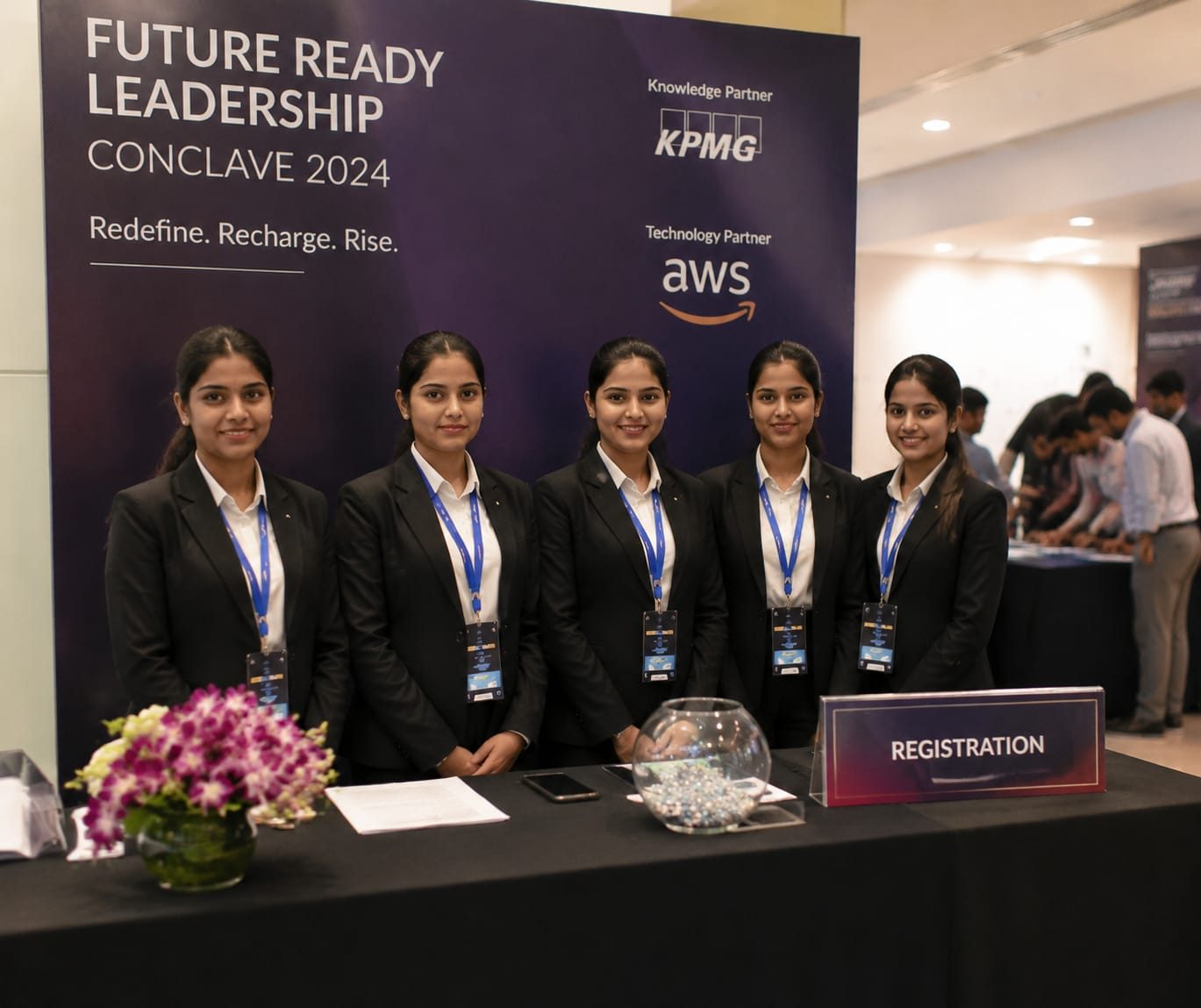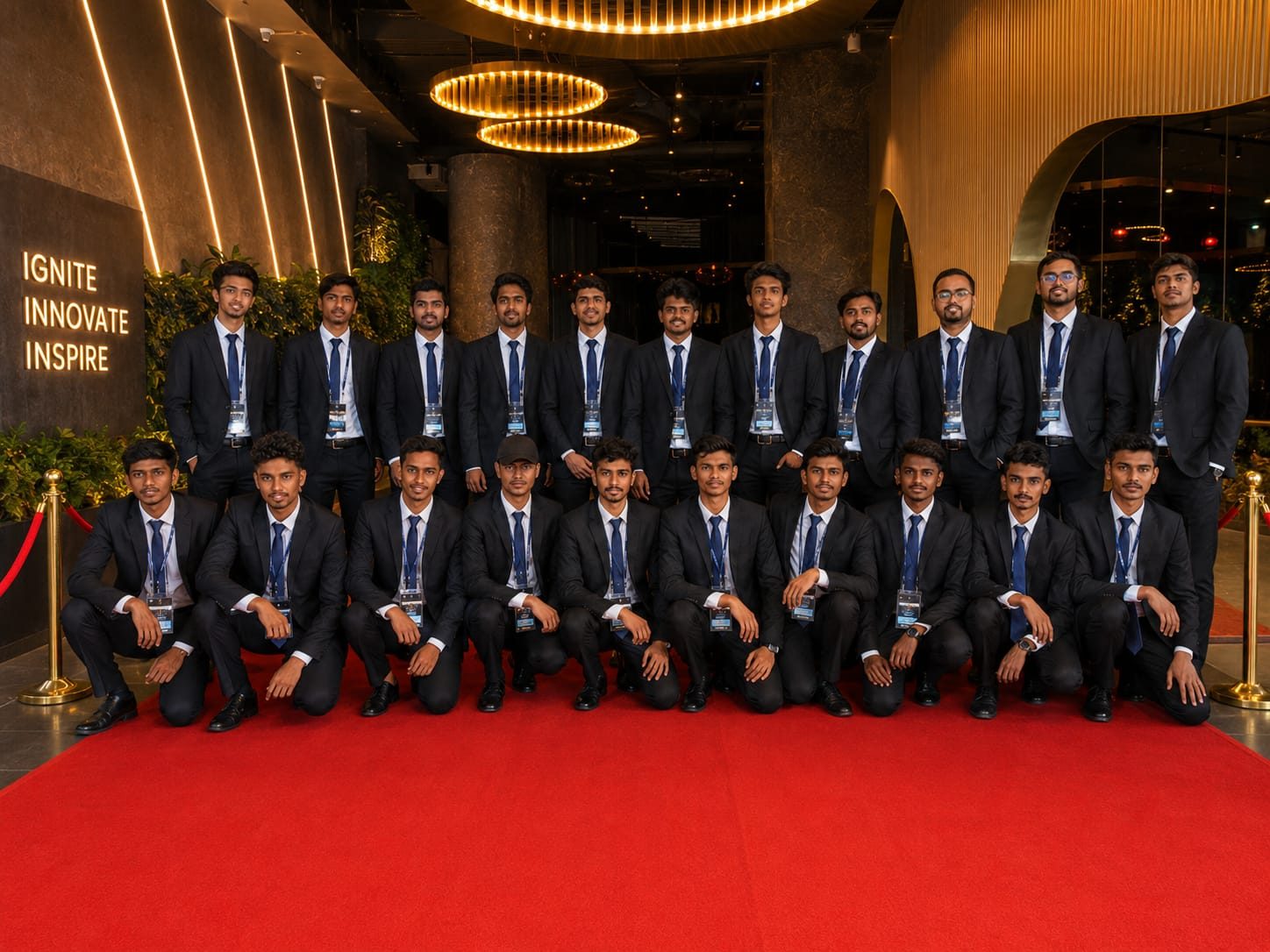

How to plan registration desk staffing
Plan registration desk staffing from your arrival curve. Work out the largest number of guests likely to arrive in any single thirty-minute window, size the counters and crew for that window, then add crowd crew to hold the queue and a relief rotation so no counter closes during a break.
That is the whole method. The reason most registration desks struggle is that they were planned from total guest count, which hides the peak that actually breaks the desk.
Registration is the first interaction a guest has with your event, so it carries disproportionate weight. A smooth check-in makes the rest of the day feel well run. A long queue at the door is remembered regardless of how good everything after it was.
- Counter count built from the peak arrival window
- One crew member per counter, plus relief cover
- Crowd crew to hold the queue
- A separate help position for exceptions
Start from the arrival curve, not the guest total
Ask three questions. What time does the event start? When do the gates or doors open? How do invitations, travel timings and the programme encourage guests to arrive? Most events see a heavy concentration in the first thirty to sixty minutes, then a steady trickle.
Add the practical variables: how many guests are pre-registered, how many walk in, whether badges are pre-printed, and whether guests need to be photographed, issued a lanyard or escorted to a lounge after check-in.
Each of those adds seconds to the transaction, and seconds compound quickly. A desk that takes fifteen seconds per guest behaves very differently from one that takes ninety.
- Largest expected arrival window in guests
- Share of pre-registered versus walk-in guests
- Average check-in time per guest, including extras
- Number of entry points guests will use
- Whether VVIPs and media use separate lanes
How many counters and crew you need
The table below is planning guidance, not a quotation. It assumes pre-printed badges, one guest per check-in and a single entry zone with a registration desk nearby.
If guests arrive in a very short window, or if check-in requires extra steps, move one row up. It is cheaper to add crew than to explain a door queue to the guests standing in it.
Two factors move the numbers more than anything else: whether badges are pre-printed, and whether a guest needs anything beyond a badge. Photography, delegate kits, seat allocation and payment collection each add time to a transaction, and time per guest is what decides how many counters the peak window needs. Work backwards from the seconds, not from the guest total.
| Peak arrivals in 30 minutes | Indicative counters | Desk crew | Crowd crew for the queue |
|---|---|---|---|
| Up to 60 | 2 | 2-3 | 1 |
| 60-120 | 3 | 3-4 | 1-2 |
| 120-200 | 4-5 | 5-6 | 2-3 |
| 200-350 | 6-8 | 7-9 | 3-4 |
| 350+ | Multiple entry zones with dedicated lanes | Zone-based teams | Built from the queue design |
Split the roles at the desk
A registration desk is not one job. It is several, and separating them keeps the queue moving. The fastest desks run on specialisation: distinct people doing distinct tasks rather than everyone attempting everything.
If a guest arrives with a problem — a missing name, a badge that has not been printed, a change of delegate — that case should leave the counter and move to a help position rather than blocking the lane behind it.
Registration desk teams are deployed with a supervisor who owns the desk and reports to your event team, so escalations have a route that does not pass through the front of the queue.
- Line manager — one crew member moving guests into open lanes
- Counter crew — identify the guest and hand over the badge
- Help desk — resolve missing, amended or duplicate registrations
- Lanyard and kit position — issue badges, bags and collateral
- Escort crew — walk VIPs, media and speakers to their area
- Desk supervisor — owns the desk and the escalation path
What has to be ready before the desk opens
Most desk problems on event day are set-up problems, not staffing problems. If the badge printer is not connected, the guest list is on someone's laptop, or the lanyards are still in a box in the holding room, no amount of crew will save the queue.
Confirm the set-up list with your event team at least a day before, and again at the venue during the pre-open check. The crew should know where everything is before the first guest arrives, not discover it mid-rush.
Walk the desk positions with the crew supervisor when you arrive on site. Standing at the actual counter and confirming which side guests approach from prevents a lot of avoidable confusion.
Keep a printed guest list at the desk as well, so a network drop does not stop check-in. Agree who prints that list and who checks it, because that handover is where most desk delays actually start.
- Pre-printed badges sorted alphabetically or by registration ID
- Guest list accessible on at least two devices at the desk
- Working scanners or a printed backup list
- Badge printer, spare stock and a power point that works
- Lanyards, delegate kits and collateral staged at the desk
- Signage for lanes, help desk and directions beyond the desk
Control the queue before it forms
Queue control begins outside the desk, not at it. Guests who can see where the lane starts and which lane is fastest will self-organise. Guests who cannot will cluster, and a cluster is harder to manage than a line.
Use crowd crew to hold the lane and keep the space in front of the counters clear. The desk crew should never step away from check-in to answer directions, and the crowd crew should never handle registration data.
Prepare for three predictable moments: the opening rush, the post-keynote break when a wave of late arrivals hits, and the lunch or tea break when guests leave and re-enter the event area.
Use retractable barriers or floor tape where the venue allows it, and place a crew member at the head of the lane rather than in the middle, so the queue is held where it forms rather than where it ends.
VIP, media and speaker lanes
VVIPs, media and speakers should never stand in the general queue. A separate lane or a separate desk, staffed by guest relations crew, protects their time and removes the disruption their arrival causes at the main desk.
Brief this crew separately. They need the names and titles of expected guests, the protocol for each, who escorts them where, and a discreet route to the lounge or green room.
Keep the VIP lane out of the general sightline where possible. A visible empty lane next to a long queue creates its own problem.
Decide in advance who may use the lane. Board members, panellists, sponsors and press are common, and each carries a different protocol. If the list stays open-ended, the lane fills with guests who saw it and decided it looked faster.
- A separate lane or desk away from the main queue
- Names, titles and escort routes briefed in advance
- A discreet path to the lounge or green room
Multi-day events and shift rotation
On multi-day events, the desk requirement changes shape each day. Opening day carries the heaviest arrival peak. Middle days run lighter, with more on-site registrations and badge reissues. The final day often combines a light morning with heavy departure questions.
Plan day-wise headcount rather than a flat number, and rotate crew so the same people are not locked to the busiest position for three straight days.
Beyond eight hours on the desk, build explicit handover points. A short brief at the handover — outstanding issues, guest names to watch for, any changes since the morning — keeps the standard steady across shifts.
Keep a running note of unresolved guest issues so the next shift starts with context rather than a blank desk.
- Day-wise headcount rather than one flat number
- Rotation off the busiest position
- Explicit handover points beyond eight hours
What to hand your staffing partner
Send the event type, date, city, venue, reporting time, expected arrivals in the peak window, number of entry points, whether badges are pre-printed and any VIP, media or speaker protocols. That is enough to plan and price the desk properly.
If you are still estimating arrivals, say so. The plan can be built with a range and refined closer to the event; it is much harder to add counters at 8am on the day.
EventEdge deploys registration desk teams with a supervisor, a briefing on the venue and guest flow, and an itemised quotation mapped to counters, crew and days — typically within two working hours once the requirements are complete. You can also review the wider role on our registration desk staffing page.
Frequently asked questions
How many staff should I plan for a registration desk?
One crew member per counter, plus crowd crew to hold the queue and a supervisor for escalations. Size the counters for your largest thirty-minute arrival window rather than the total guest count.
Should pre-registered and on-site guests use the same desk?
No. Separate lanes keep both flows moving. Mixing them slows pre-registered guests, who process fastest when they reach a dedicated counter.
Do I need separate staff for VIP check-in?
Yes. VVIPs, media and speakers should use a separate lane staffed by guest relations crew, briefed on names, titles and the escort route.
How do you handle breaks without closing a counter?
Build relief cover into the crew number and stagger breaks so every counter stays open. Running the roster at exactly the minimum is what causes desks to thin out mid-event.
How early should registration crew report?
Crew should report with enough time to complete the pre-open check, walk their positions and confirm the set-up before the first guest arrives.