Corporate event guest management checklist: the short version
Guest management is the part of a corporate event that guests judge within the first ten minutes. The checklist below follows the whole guest path: invitation and RSVP data, arrival and check-in, VIP and VVIP handling, hospitality and seating, support through the event, and follow-up after it closes.
A checklist only works if it has three properties. One person owns it. Every line names the staff position responsible. Every line has a deadline attached rather than just a description. A checklist without owners and times is a wish list, and wish lists do not survive event morning.
For most corporate events, the staffing side of guest management sits with registration desk teams, hospitality staff and guest relations handlers working to one on-site coordinator. That is the structure this checklist is built around.
- Guest data locked and de-duplicated before the print deadline
- Check-in flow designed first, then staffed
- VIP routes mapped separately from general entry
- Hospitality, seating and lounge zones assigned
- Arrival peaks planned by time, not by average
- Escalation path briefed to every front-of-house position
- Post-event follow-up and data handover owned by name
Before the event: get the guest data right
Guest management starts weeks before the venue. The front-of-house team can only move as fast as the guest list allows. Names spelled inconsistently, duplicate entries, missing company names and unconfirmed VIP flags all resurface as queues on event morning.
Lock the data before you lock the headcount. Decide the fields you will collect, the naming convention and who owns final approval. If the guest list is still changing the day before, plan for a help desk position: someone who handles exceptions rather than processing standard check-in.
Assign one owner for the list and one backup. When two people can edit the master sheet without a freeze time, you will print badges twice.
- Confirm the RSVP cut-off and the list freeze time
- Standardise name format and remove duplicate entries
- Flag VIPs, speakers, sponsors, media and board members clearly
- Record accessibility requirements and dietary needs
- Prepare badge data with a buffer for walk-ins
- Agree who approves late additions on event morning
Design the check-in flow, then staff it
Check-in design drives your headcount. A single queue for every guest forces you to over-staff; splitting pre-registered guests from walk-ins and VIPs lets a smaller team move more people. Decide the counter plan first, then convert it into staff positions.
The table below is planning guidance for corporate events. Actual counts depend on your arrival curve, badge printing speed and venue access.
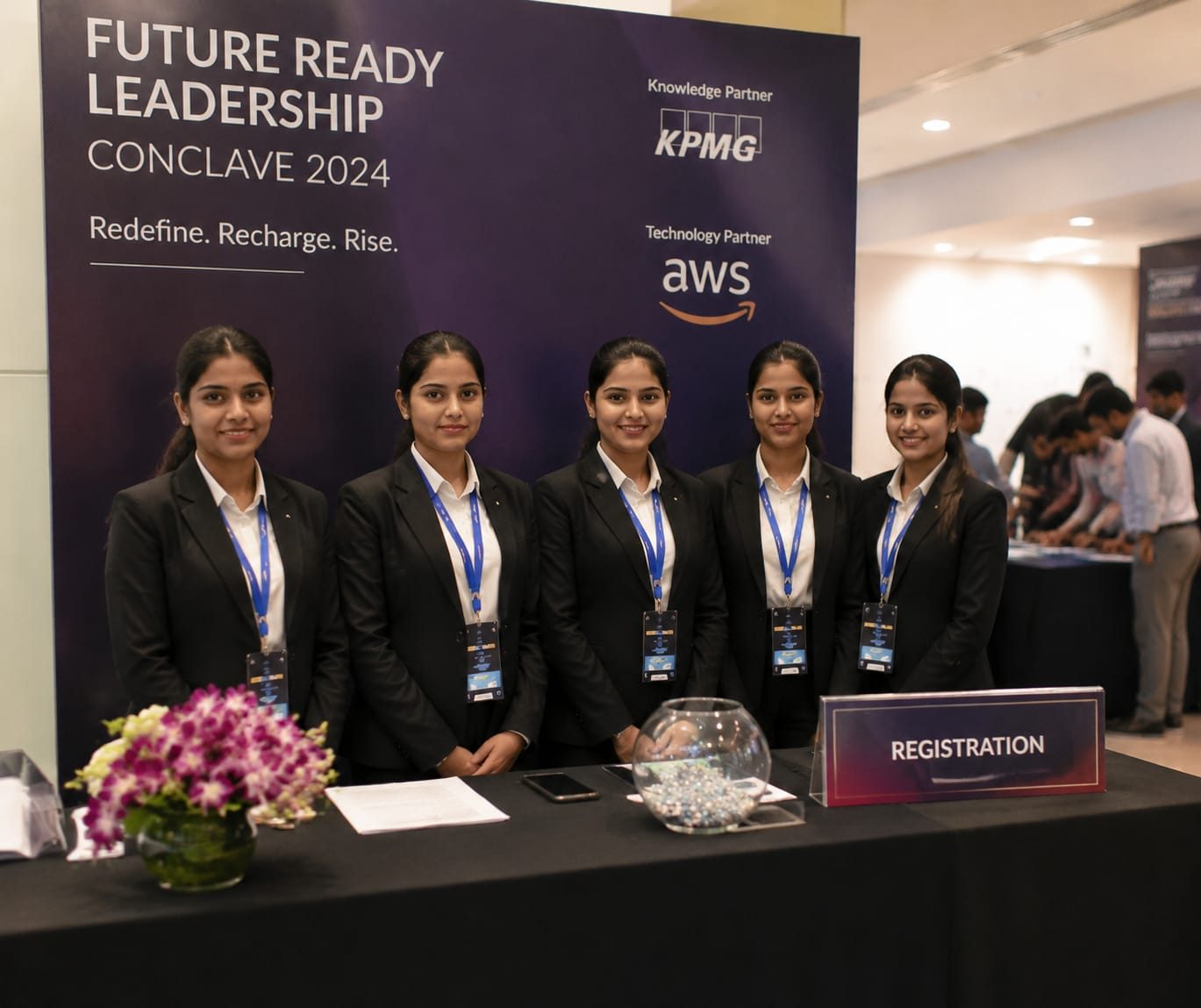
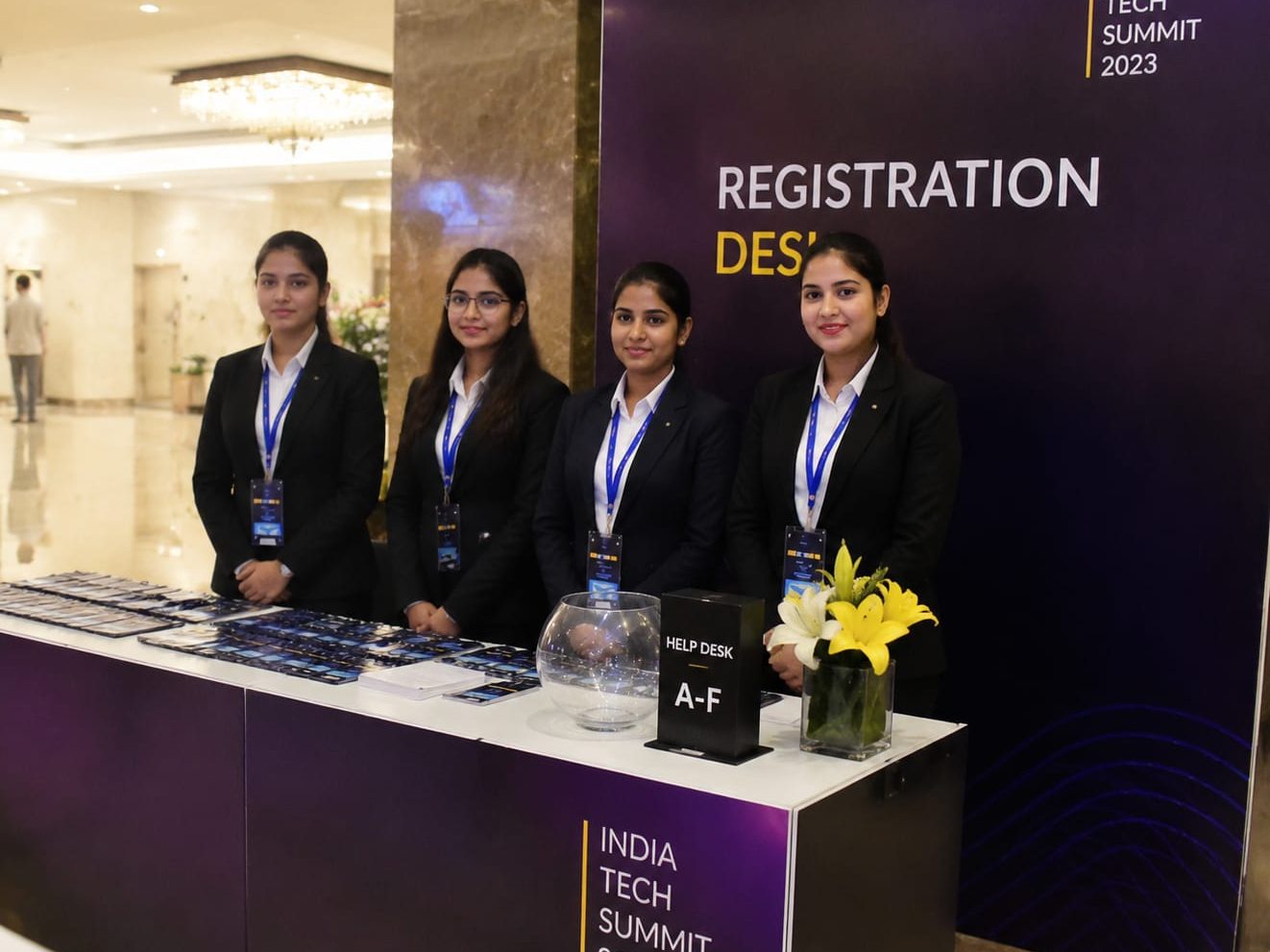
Once the plan is drawn, the positions map cleanly to a registration desk team supported by crowd management at the entry points. Write each position on a one-page floor plan with reporting times next to it; a marked plan is easier to brief from than a list of names, and it shows immediately where a gap opens if someone does not report.
| Check-in position | What it handles | Typical staffing approach |
|---|---|---|
| Pre-registered counter | Fast badge or wristband collection for guests already on the list | Largest share of counters; scale to the peak arrival window |
| Walk-in registration | New registrations, corrections, badge replacements | One or two dedicated positions with a separate queue line |
| VIP and speaker desk | Priority check-in, escort handover, protocol notes | Kept clear of general queues, with a named handler |
| Help desk | Exceptions, duplicates, sponsor and media queries | One senior staff member with escalation authority |
| Greeter and wayfinding | Queue management, direction to hall, lounge or cloakroom | Positioned at entry, stairwells and lift lobbies |
VIP and VVIP handling is a separate workstream
VIP handling is not a faster queue. It needs a named handler per guest or group, a route that avoids general entry, and a pre-agreed answer to the question every event faces: how far does the escort go?
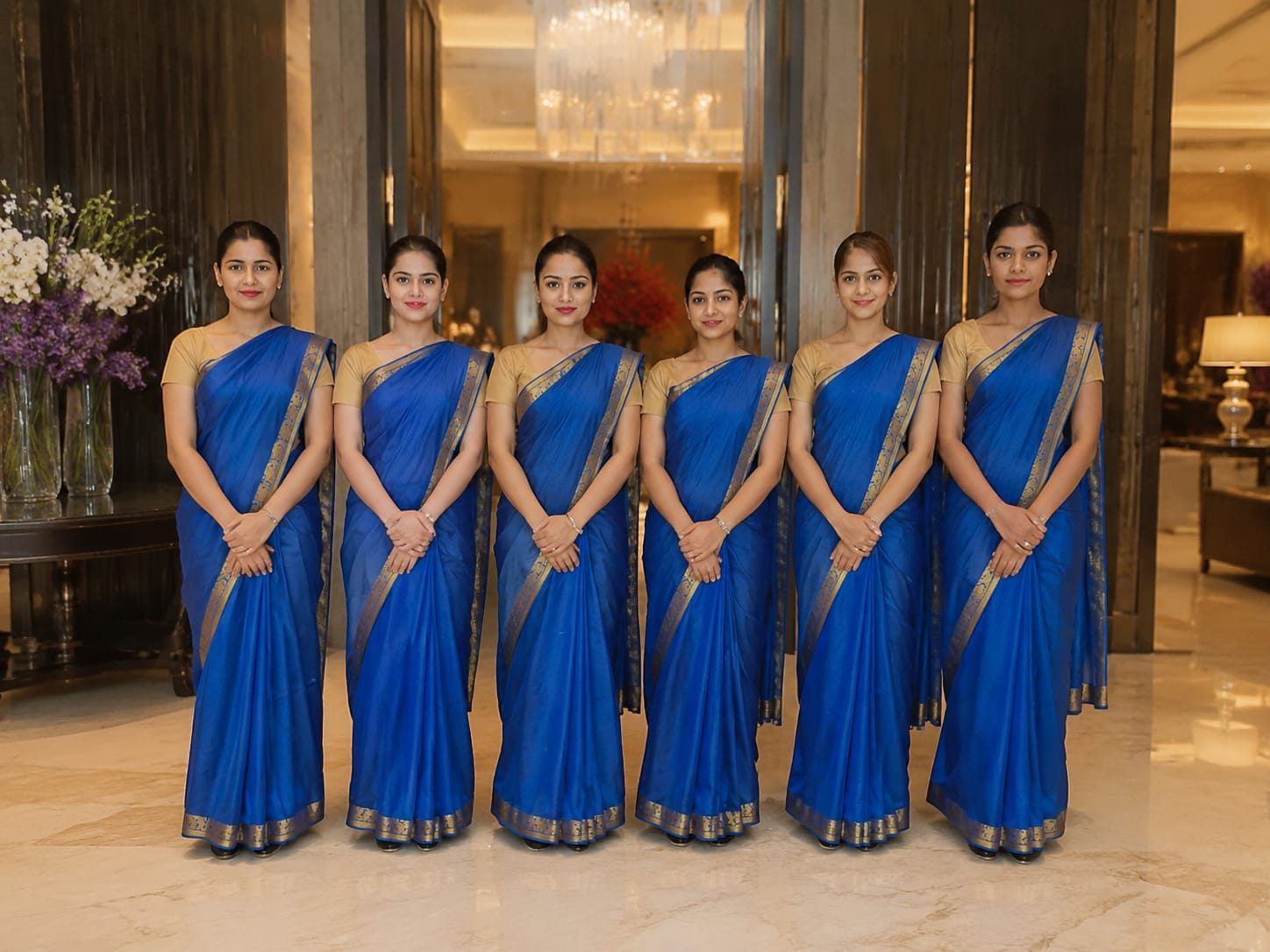
Decide in advance who gets a personal escort, who gets a reserved seat with a name card, and who simply checks in at a priority desk. Then brief the guest relations team on names, pronunciations, titles and any protocol that matters to the guest.
Discretion is part of the job description. VVIP handlers should not be the people taking photographs or discussing guest movements outside the event team. Where a guest needs security or a dedicated escort, agree that with the event team in advance and keep the protocol written down.
Hospitality, seating and lounge coverage
Hospitality covers everything after the badge: welcome drinks, seating, lounge service, dietary requests and the quiet spaces guests use between sessions. It is the part guests remember most, and the part most often left short-staffed.
Map the venue into zones and assign staff per zone rather than as a floating pool. A hospitality team with no zone ownership drifts to wherever the activity is, which leaves the lounge empty exactly when a guest needs it.
Zone ownership also gives you a clean escalation path. Each zone lead reports to the coordinator, so a shortfall in one area is visible before a guest notices it.
- Welcome and registration lounge service
- Seating and reserved block management
- F&B coordination with the caterer
- Dietary and accessibility requests
- Speaker and green room support
- Cloakroom and baggage handling
- Floor floating for guest queries
Plan for arrival peaks, not averages
Average arrival rate is a misleading number. Most corporate events see a steep rush in the thirty to forty minutes before start time, a second smaller wave after the first session, and near-zero flow in between. Staffing to the average almost always ends in a queue at the peak.
Build an hour-by-hour arrival estimate with your event team, then place staff against the peak and rotate them off once it clears. This is where event coordination support earns its place: someone watching the door and moving people between counters as the curve shifts.
Two practical moves help at every peak. A distinct queue line with clear signage, and a greeter who answers simple questions before guests reach the counter. Both cut counter time without adding a single position.
Guest support during the event
Once check-in closes, guest management does not stop. Session changeovers, direction queries, seating changes, lost items and sponsor requests all land on the front-of-house team. The help desk should stay staffed through the day, because the person who solved a problem at 9am is the person guests look for at 2pm.
Brief the crew on three things beyond their own role: where the washrooms are, who owns lost property, and how to reach the coordinator quickly. Those three questions account for a large share of guest interruptions and none of them need a supervisor.
Keep one staff member free of fixed positions as a floater. Guests approach the nearest person in uniform, not the person with the correct job title.
- Help desk staffed through the full programme
- Floater assigned to unscripted guest queries
- Session changeover support at hall doors
- Lost property owner named and briefed
- Sponsor and media requests routed, not absorbed
After the event: follow-up, data and debrief
Guest management ends with the handover. Collect attendance data, badge scans and any notes the team captured during the day, and return them in a usable format within a day or two while the detail is still accurate.
Then debrief. Fifteen minutes with the crew lead and your event team will tell you what the checklist missed: which counter backed up, which zone ran short, which guest route confused people. That feedback is what makes the next event cheaper to staff.
If the same event runs again next year, the debrief notes are the first draft of the next plan.
- Attendance and no-show reconciliation
- Badge scan or check-in data handover
- VIP and speaker follow-up list
- Incident and exception log
- Crew debrief notes for the next edition
Turning the checklist into a staffing plan
Convert the checklist into positions, shift times and reporting instructions. Most corporate guest management crews combine registration, hospitality, guest relations and crowd management under a single coordinator, with one crew lead per zone.
Send the event date, city, venue, headcount and reporting time, and you will get an itemised staffing quotation rather than a headline rate. EventEdge Staffing deploys event crews from 5 to 500 staff, briefed on venue, role and dress code before deployment, with live coverage in Bengaluru, Chennai, Mumbai, Delhi, Hyderabad and Kerala.
Work through the checklist line by line with your staffing partner. Anything that cannot be assigned to a position is either your team's job or it does not need to happen. Keep the plan to one page, because a staffing plan nobody reads on event morning is worth less than a short one pinned up at every desk.
Frequently asked questions
What should be on a corporate event guest management checklist?
Pre-event guest data and freezes, check-in flow and counter positions, VIP and VVIP handling, hospitality and seating zones, in-event guest support, and post-event data handover and debrief. Every line should name an owner and a deadline.
How many staff do I need for guest check-in?
That depends on your arrival curve, badge printing speed and guest profile, so treat any fixed ratio with caution. Split the flow into pre-registered, walk-in, VIP and help desk queues, then size each queue against its own peak window.
Who should handle VIP guests at a corporate event?
Guest relations and VVIP handling staff, with one named handler per guest or group, a route that avoids general entry, and a briefed protocol on escort distance and discretion.
Is guest management the same as registration desk staffing?
No. Registration desk staffing is one part of guest management. Guest management also covers hospitality, seating, VIP handling, in-event support and post-event follow-up.
How quickly can staffing be arranged for a corporate event?
Deployment capability is 24 hours, and itemised quotations are typically returned within two working hours, subject to receiving complete event requirements.