What a wedding staffing checklist covers
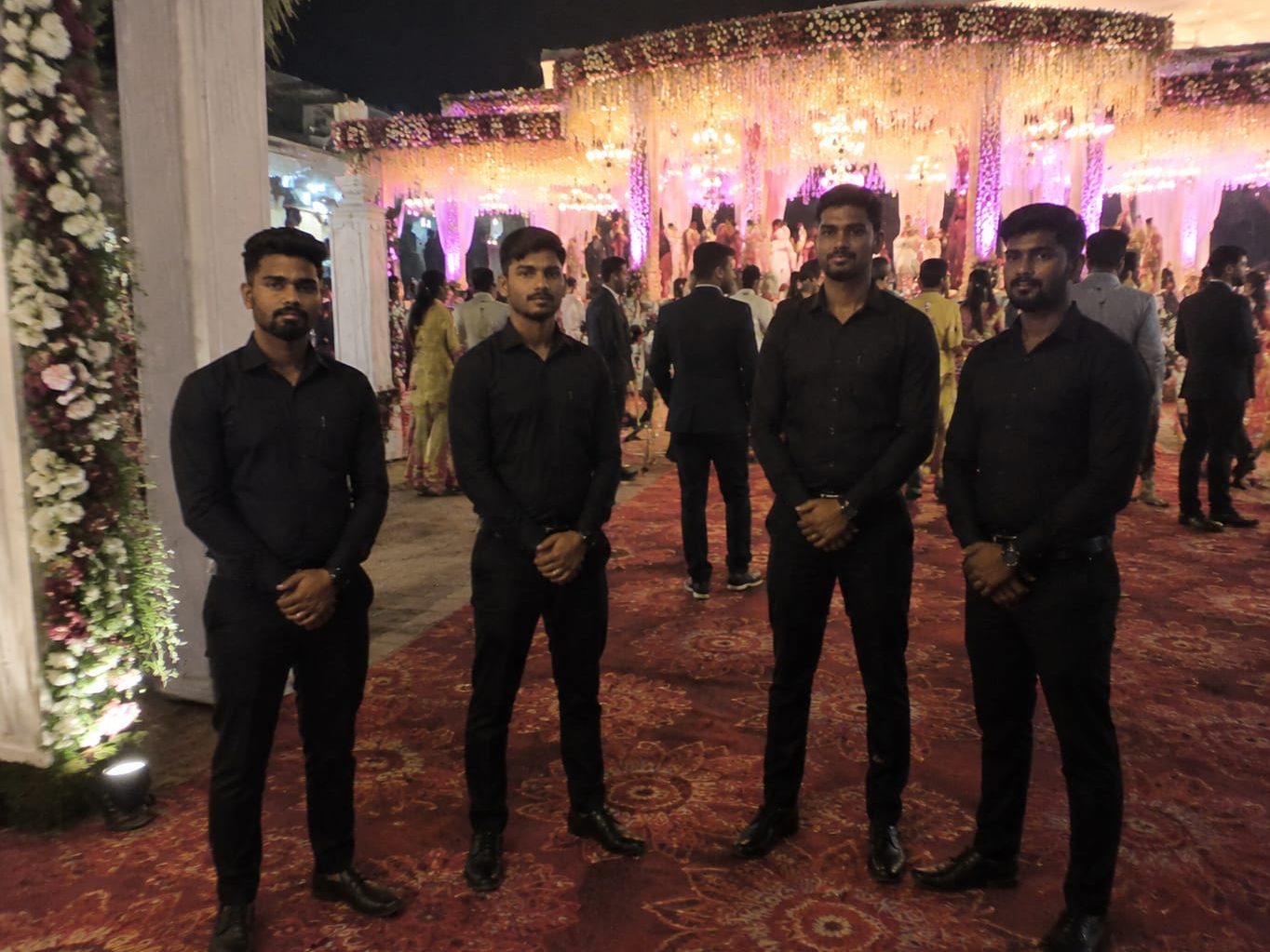
A wedding staffing checklist covers the people who look after guests on the day: ushers who seat them, hosts who receive them, valet crew who park and return their vehicles, hospitality staff who serve them, and VVIP handlers who look after family and special guests.
It does not cover the wedding itself. EventEdge Staffing supplies wedding ushers, hosts, valet crew, hospitality staff and VVIP handling. We are not a wedding planning company and we do not design decor, build stages, run production or manage your vendor contracts. Those stay with your wedding planner or your family's chosen vendors.
Read this checklist as a staffing plan for the guest experience. Everything before the guest arrives — the decor, the menu, the photographer — belongs to someone else.
- Guest reception hosts and ushers
- Valet and arrival crew
- Hospitality and dining service staff
- VVIP, family and elder guest handling
- Crowd flow at entry, dining and exit points
- On-site coordination support across functions
Start with the function timeline, not the venue
A wedding is not one event. It is a sequence of functions with different guest behaviour, different timings and different staffing needs. Building the crew plan from the venue map alone misses all of that.
List every function with its start and end time: muhurtham, baraat or procession, lunch or dinner, reception, and any smaller family rituals. Note where guests arrive, where they sit, when they eat, and when they leave.
That timeline is what tells you when you need valet crew concentrated, when ushers are busiest, and when hospitality should be at full strength. It also tells you where shifts overlap, so you are not paying for a full crew during a two-hour lull.
- Every function listed with start and end times
- Arrival windows marked with expected guest volume
- Seating and dining windows identified
- Guest departure spread across the evening
- Shift overlaps planned rather than assumed
Arrival, parking and valet crew
Arrival is the first guest experience of the wedding, and the one most often understaffed. Guests who wait twenty minutes for their car to be parked remember it long after they have forgotten the menu.
Valet crew should be sized against the arrival peak, not the total guest count. If most guests arrive in a ninety-minute window, that window determines how many drivers and parking marshals you need, with a smaller team held for departures.
Brief the crew on the venue's access layout in advance: the drop-off point, the parking route, the return lane, and what to do when the lot fills. A valet team that has rehearsed the route moves twice as many cars as one learning it on the day.
| Function window | Guest behaviour | Where to concentrate crew |
|---|---|---|
| Arrival and baraat | Vehicles arriving in a short peak, guests on foot near the entry | Valet and parking marshals, greeters, entry crowd management |
| Ceremony | Guests seated, low movement, elderly guests need assistance | Ushers for seating, hospitality for water and refreshments |
| Dinner and reception | High movement between seating and dining, photographs at entry | Hospitality and dining service, floor ushers, VVIP handlers |
| Departure | Guests leaving in waves, vehicle retrieval requests clustering | Valet return lane, exit marshals, host farewell position |
Guest reception, ushers and seating
Ushers are the most visible staffing decision at a wedding. Their job is to receive, direct and seat guests quickly without making anyone feel processed.
Cover the entry with hosts who greet and confirm which side or section a guest belongs to, and place ushers inside the hall to walk guests to their seats. For larger weddings, assign ushers to defined blocks so no guest is ever handed off between two people who both assume the other is handling it.
Brief ushers on the sensitive details in advance: family seating sensitivities, reserved blocks for close family, and the difference between a guest who needs a front seat and a guest who simply arrived early. Give each usher a printed seating plan for their block, and keep a spare copy at the entry for late arrivals.
VVIP, family and elder guest handling
Close family, elders and special guests need a different standard of attention. They should not be standing at the entry waiting to be identified, and they should not be walking long distances to find a seat.
Assign a named handler to each VVIP group. The handler knows in advance where the guest parks, which entrance they use, where they sit and who receives them. For elder guests, plan assistance with mobility, seating access and refreshments without making the assistance conspicuous.
Discretion matters here more than anywhere else at a wedding. Handlers should be briefed that family matters, guest movements and any sensitive discussions do not leave the crew.
- Named handler per VVIP guest or family group
- Pre-agreed entrance and parking arrangement
- Seating marked and known before arrival
- Elder guest assistance briefed without being intrusive
- Confidentiality rule stated in the crew brief
Hospitality, dining and lounge service
Hospitality carries the middle of the wedding day: welcome drinks during arrival, water and refreshments during the ceremony, service through the meal, and lounge coverage for guests who step away from the main hall.
Divide the venue into zones and assign staff per zone. Dining service and lounge service are different jobs and should be staffed separately, or the lounge will empty out the moment dinner begins.
Coordinate service timing with the caterer rather than the crew working independently. A hospitality team that knows when the buffet opens can pre-position guests and avoid a rush at the counters.
Staff the dining counters separately from the seating floor wherever guest numbers allow. The seating team keeps guests moving to their places while the counter team manages service speed, and the two should never be pulled into each other's zone during the meal.
Managing the ceremony-to-reception transition
The hardest hour of a wedding is the changeover: guests leaving the ceremony seating, the hall being reset, guests arriving for the reception, and photographs happening simultaneously.
Plan this window explicitly. Keep a small usher team on the exiting function until the last guest has moved, a separate team managing the incoming arrivals, and hospitality circulating so waiting guests are not left standing without refreshments.
Brief crowd management support for the overlap window if the venue has a single entry or a narrow corridor. One well-placed marshal with a clear instruction prevents the arrival bottleneck that families always remember.
Expect the changeover to run longer than the timeline suggests. Build a fifteen-minute buffer into the plan and staff that buffer, rather than treating it as slack to be trimmed once the day is running late.
Coordinating with your planner, decorator and vendors
EventEdge is not the wedding planner, and the crew should never be mistaken for it. The planner or family coordinator owns the schedule; our crew lead owns the guest-facing staff and reports to that person.
Agree one point of contact for the crew before the event. When the planner, the caterer, the decorator, the family and the venue all have opinions about where the ushers should stand, a single reporting line is the only thing that keeps the floor calm.
Provide the crew lead with the day's timeline, the seating layout, the VVIP list and any vendor access rules. That is the minimum needed, and everything else can be confirmed on site.
- One named crew lead, reporting to your coordinator
- Timeline and seating layout shared in advance
- VVIP list with handling notes
- Vendor and venue access rules briefed
- Labour and access restrictions confirmed with the venue
How many wedding staff, and how to brief them
Wedding crew counts should be built function by function and added together, not estimated as a single number. Arrival peak, ceremony, dinner and departure each have their own requirement, and the total crew is the sum of those windows.
EventEdge Staffing deploys wedding crews from 5 to 500 staff, with ushers, hosts, valet crew, hospitality staff and VVIP handlers briefed on the timeline, venue, dress code and escalation path before deployment. Live coverage is based in Bengaluru with crews deployed in Chennai, Mumbai, Delhi, Hyderabad and Kerala.
Send the function dates, city, venue and the expected guest count and you will receive an itemised staffing quotation for each function, typically within two working hours subject to complete requirements. Keep the crew lead's number on the seating plan, so a question at the desk is answered without anyone leaving their position.
Frequently asked questions
Does EventEdge plan or decorate weddings?
No. EventEdge supplies wedding staffing — ushers, hosts, valet crew, hospitality staff, VVIP handling and coordination support. Wedding planning, decor, production and creative direction stay with your planner or your family's vendors.
What wedding roles can EventEdge provide?
Ushers, guest reception hosts, valet and parking crew, hospitality and dining service staff, guest relations and VVIP handlers, crowd management for entry and exit, plus on-site coordination support.
How many valet staff does a wedding need?
Size valet crew against the arrival peak rather than the total guest count, then hold a smaller team for departures. The venue's parking layout and distance from the drop-off point will also change the number.
Can crew handle multi-day wedding functions?
Yes. Crews can be deployed across multiple functions and days, with the brief adjusted per function because arrival, seating and dining windows differ on each day.
How much notice do you need for wedding staffing?
Earlier is better for peak wedding dates, but deployment capability is 24 hours and itemised quotations are typically returned within two working hours, subject to receiving complete requirements.