How to brief event staff before deployment
Brief event staff before deployment so they arrive already knowing the plan. Every briefing should cover five things: how to reach the venue and get inside, what the role does hour by hour, what to wear, who to escalate to, and what the guest-facing standard is. Deliver it in writing before the day, then confirm it in a short on-site huddle.
The purpose is simple: crew who know the plan spend their first hour executing, and crew who do not spend it asking questions. On a registration desk at 9am, those questions are asked in front of your guests.
This is the part of event staffing that is hardest to fake and easiest to under-specify. A supplier can promise good crew; only a working briefing process produces a crew that behaves correctly when the plan changes.
The five things every briefing must cover
Venue access. How to travel to the venue, which gate or entrance to use, what to say at security, where to report and at what time. Crew who cannot get in on time are crew you do not have.
The hour-by-hour role. Not a job title, but what the person is doing at each stage of the event, including the quiet periods. Most errors happen when crew are unsure what to do between peak moments.
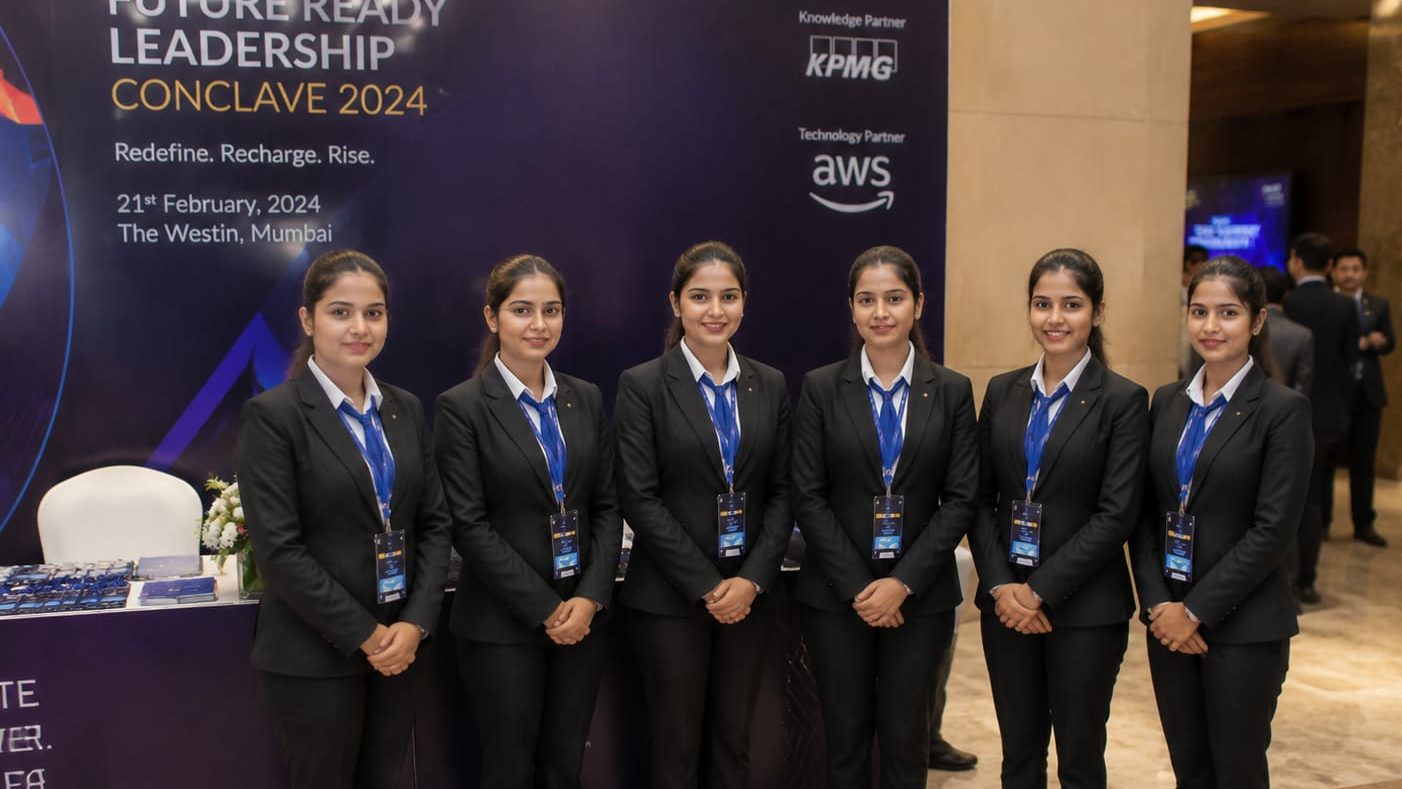
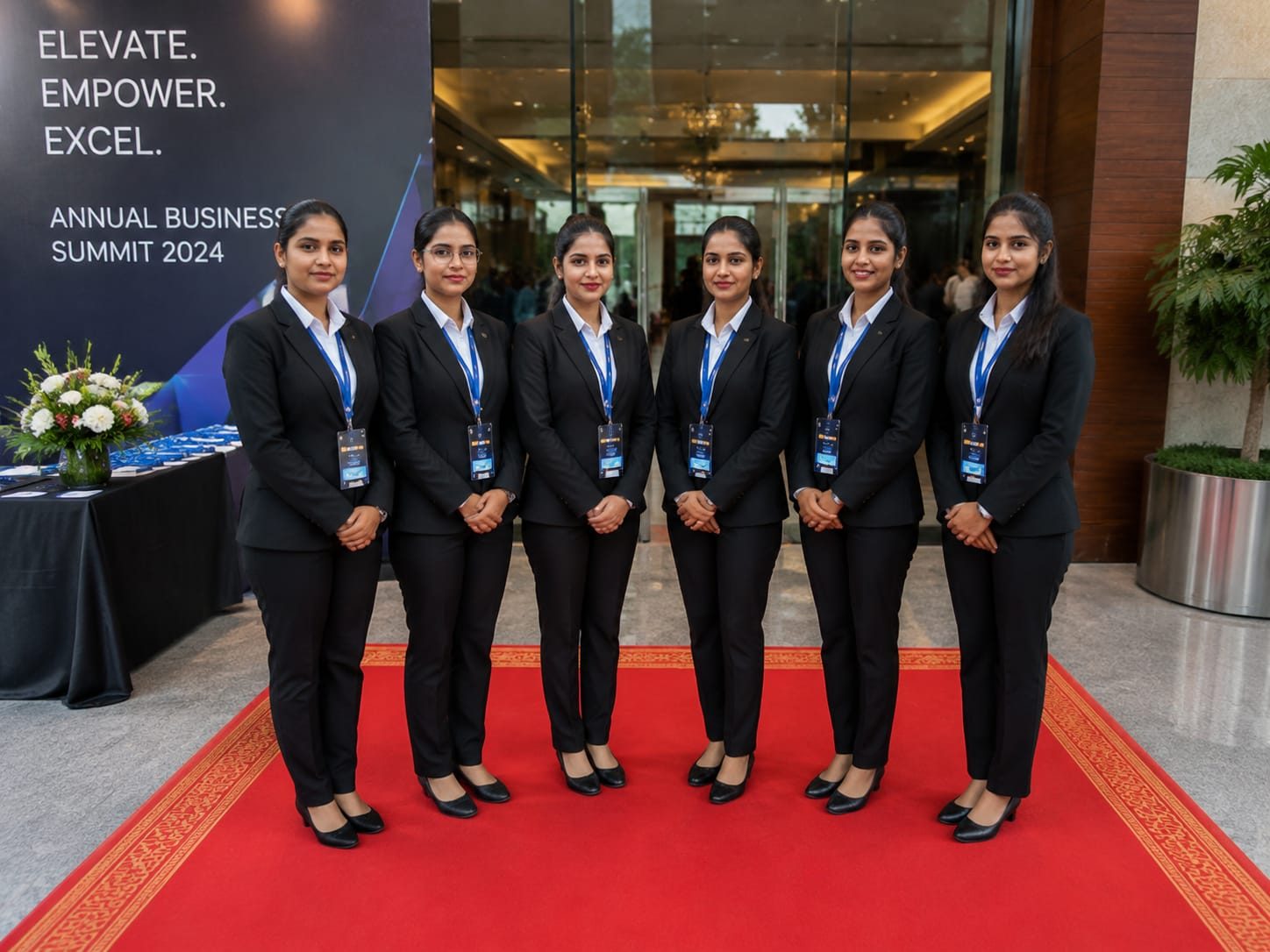
Dress code. The uniform standard, who supplies it, and what is not acceptable. Photographs of the correct standard remove ambiguity faster than a written description.
Escalation path. Who the crew member reports to, who that person reports to, and what the crew member is explicitly not authorised to decide on their own.
Guest-facing standard. The tone, the language and the service expectation, with examples of what to say and what never to say.
- Venue access, reporting point and reporting time
- Hour-by-hour role, including quiet periods
- Dress code with the uniform standard shown
- Escalation path and decision boundaries
- Guest-facing standard and approved language
What goes into a role card
A role card is the one-page document each crew member carries or receives. It converts the briefing into something they can check at any point during the shift, which matters because a verbal briefing delivered three days earlier will not be remembered in detail.
Keep it short enough to read in two minutes. Every extra paragraph reduces the chance the important lines get read at all.
EventEdge issues role cards as part of the pre-deployment briefing, so a crew member can answer most questions without leaving their position.
Send the card as a document crew can open on a phone, and keep the wording identical across the whole team. Where a section needs a different card, version it clearly so nobody works from an older instruction. The card is also the fastest way for a supervisor to confirm that a replacement has the same information as the person they replaced.
| Section | What it contains |
|---|---|
| Position | Exact spot on the floor plan and who they report to |
| Timeline | Reporting time, key moments, break timing, end of shift |
| Tasks | What to do in the peak, the lull and any transition |
| Dress | Uniform standard, grooming notes, what to bring |
| Escalation | Names and numbers for the supervisor and event control |
| Language | Phrases to use, topics to avoid, who to hand off to |
When to brief: before the day, then on site
Brief twice. The main briefing goes out before the event, giving crew time to read the role card, plan their travel and raise questions. The second briefing is a short huddle at the venue before the event opens, covering only what has changed.
The pre-event briefing should reach crew at least a day ahead, and longer for complex roles. VVIP handlers, hosts and supervisors need more lead time, because their briefing includes protocol, scripts and names.
The on-site huddle should take a few minutes, not twenty. Its job is to confirm positions, flag any venue change and make sure every crew member has physically found their spot before the doors open.
Keep the written briefing and the on-site huddle in the same order. When the huddle follows the document, it feels like a reminder; when it introduces new information, crew stop trusting the document.
Venue walkthroughs and access notes
Crew who have never been to the venue need more than an address. They need to know which entrance is usable, whether there is a separate staff gate, where bags and belongings can be left, where the crew rest point is and how to reach a washroom without crossing a guest area.
Walking the positions with the whole crew takes ten minutes and prevents the most common event-day failure: crew standing in the wrong place because nobody confirmed the location.
Where a walkthrough is not possible — a venue with restricted access, or a large crew arriving in waves — use marked floor plans and photographs of each position in the briefing pack.
Photograph the positions once they are set on site, so the next event at that venue starts from a picture rather than a description.
- Which gate is usable and where crew report
- Where belongings and crew rest points are
- How to reach a washroom without crossing a guest area
Escalation paths and decision boundaries
Tell crew what they may decide and what they may not. A registration crew member can move a guest to an open counter. They cannot approve a replacement badge for an unregistered guest, waive a payment or admit someone without credentials.
Every crew member should know the supervisor's name, the supervisor's number and the route to event control. Saying so in the briefing is not enough; put it on the role card so it is available when it matters.
The same applies upward. Your event team should know exactly who to contact for a staffing issue, so a crew problem does not circulate through three people before anyone acts.
- What the crew member may decide alone
- What must go to the supervisor
- What must go to the organiser or event control
- Named supervisor and contact number on every role card
- A single named contact for your event team
Dress code and uniform standards
Dress code briefings fail when they describe rather than show. "Formal black" means different things to different people. A photograph of the exact standard — blazer, shirt colour, shoe type, lanyard placement, hair and grooming norms — removes the guesswork.
Be explicit about what crew must bring and what is supplied. If the agency supplies the uniform, say when it is issued and how it is returned. If crew supply their own shoes, say what is acceptable.
Check the standard at the pre-open huddle, not at the desk. A crew member who arrives out of standard should be corrected before the doors open, not in front of a guest.
Where a uniform is issued on site, build the issue time into the reporting time so crew are dressed before the huddle rather than during it.
- A photograph of the exact standard, not a description
- What the agency supplies and what crew bring
- Time built in for on-site uniform issue
Guest handling and language
The guest-facing brief is where a crew's behaviour is decided. Cover the tone expected for the event type, the language guests will use, and the hand-off rules for questions the crew cannot answer.
Give examples. A conference usher directs a delegate to a hall and confirms the session time. A promoter answers product questions within the approved pitch and hands anything beyond it to the exhibitor's team. A VVIP handler escorts and does not converse beyond protocol.
Also brief what not to say: no pricing claims, no comparisons with other brands, no speculation about the programme, and no discussion of client information in guest areas. Crew talk comfortably, and they talk in public spaces.
- Tone expected for the event type
- Language and dialect guests will use
- Questions the crew may answer directly
- Questions that must be handed to the organiser
- Topics the crew must never discuss on the floor
Briefing large crews without losing consistency
A briefing that works for eight crew does not automatically work for eighty. In large deployments the message degrades unless it is structured, so the briefing is split by section rather than delivered once to everyone.
Section supervisors are briefed first, in more depth than their teams. They then brief their own section using the same role cards and the same standards, which keeps the message identical while shrinking the group size.
Keep one master briefing document for the event, versioned and dated. When something changes, the change flows to that document and then to the supervisors, so no section is working from an older instruction.
Ask for the crew list with section names and supervisor numbers before the event, so you know exactly who to contact if something goes wrong on the day.
- One master briefing document, versioned and dated
- Section supervisors briefed first and in more depth
- Identical role cards across every section
What to send your staffing partner
Give your staffing partner the material the crew actually needs: the venue address with the exact entrance, a floor plan with positions marked, the run-of-show with timings, the guest profile and language, the dress code, the VIP and media protocols, and the name of your on-site contact.
If some of that is not finalised, send what you have and flag what is pending. A briefing built on a partial brief can be updated; a briefing that starts the morning of the event cannot.
EventEdge briefs every crew before deployment — venue notes, role cards, dress code and escalation path — and provides on-site coordination support so your event team has one contact rather than a crew. Send the event details to request a staffing plan, and the briefing will be structured with you before deployment day.
- Venue address with the exact entrance
- Floor plan with positions marked
- Run-of-show with timings and handover points
- Guest profile, language and VIP protocols
- The name of your on-site contact
Frequently asked questions
How far in advance should event staff be briefed?
Send the written briefing at least a day before deployment, and earlier for complex roles such as hosts, VVIP handlers and supervisors. Confirm it in a short huddle on site before the event opens.
What should a briefing cover?
Venue access and reporting time, the hour-by-hour role, the dress code and uniform standard, the escalation path with decision boundaries, and the guest-facing standard including language.
Do crew need a written role card?
Yes. A one-page role card keeps the briefing available during the shift, so crew can check their position, timeline and escalation contact without leaving the floor.
Who briefs the crew — the organiser or the staffing agency?
The staffing agency briefs the crew on venue, role, dress code and escalation, using the event details and run-of-show supplied by the organiser. Any protocol or content decisions remain with the organiser.
How do you keep a 200-person crew consistent?
Split the briefing by section, brief section supervisors first, and work from one master briefing document and identical role cards so every section receives the same instruction.