
The mistakes that cause most event-day staffing failures
When a front-of-house desk backs up, a VIP is left waiting, or a crew member simply does not arrive, the instinct is to blame the individual. In practice the cause is almost always upstream: a briefing that never happened, a role that was never defined, or a replacement plan that was never built.
The seven mistakes below account for most of the staffing problems event teams describe. None of them require a bigger budget to fix. They require a decision made earlier than it usually is.
If you recognise three or more of these in your last event, treat the next one as a staffing plan exercise rather than a headcount request.
- Briefing the crew on the morning of the event
- Buying headcount instead of defining roles
- Staffing to the average arrival rate
- Having no replacement plan for no-shows
- Leaving uniform to the last minute
- Overloading one coordinator across every zone
- Skipping the post-event debrief
Mistake 1: briefing the crew too late
Briefing at the venue, ten minutes before doors open, is the most expensive way to brief anyone. The crew is absorbing a floor plan, a dress code and a run-of-show while guests are already arriving, and every question interrupts someone who is trying to work.
The fix is a two-stage briefing. Send the written brief in advance: venue address and access point, reporting time, role description, dress code, escalation contact. Then hold a short on-site walkthrough to confirm positions and answer questions about the physical space.
Written briefs also create a record. If a crew member reports to the wrong gate, you can check the brief rather than argue about what was said.
- Venue address, gate and reporting time in writing
- Role description with the hours each task happens
- Dress code, footwear and grooming expectations
- Named escalation contact and phone number
- On-site walkthrough before doors open
Mistake 2: buying headcount instead of roles
A request for 'twenty staff' tells a staffing partner almost nothing. Twenty people doing what, in which zones, at which times? Without roles, any crew you receive will be assigned by whoever is free on the morning.
Roles also protect you commercially. Two different crew structures can cost the same and produce completely different results, and only the role list lets you compare them.
Define the roles, then apply a number to each one. Start from what each guest has to experience, then work backwards to the position that delivers it. A check-in that takes ninety seconds needs a counter and a greeter; a VIP arrival needs a handler and a separate route. Once those positions are written down, the headcount becomes an output rather than an opening bid.
| Vague request | Role-based request | Why it matters on the day |
|---|---|---|
| 20 event staff | 8 registration, 6 hospitality, 4 crowd, 2 help desk | Counters are staffed against the arrival peak, not by guesswork |
| Some promoters | 6 promoters, 1 coordinator, 1 lead capture | Data capture is owned rather than shared and forgotten |
| A few people for VIPs | 2 VVIP handlers with a separate entry route | VIPs are not processed through the general queue |
| Staff for the whole day | Shift plan with start, break and close times per role | Coverage does not disappear during breaks |
Mistake 3: staffing to the average, not the peak
If 400 guests arrive across four hours, the average is 100 an hour. It is also meaningless, because almost nobody arrives evenly. The peak window will decide whether your event looks organised or chaotic.
Ask your event team for an hour-by-hour arrival estimate. Place staff against the busiest thirty minutes, then rotate people off once that window clears and redeploy them to hospitality or the help desk.
The same logic applies to session changeovers and departure. Exit management is a staffing task too, and it is routinely left with nobody assigned. Mark the two or three pinch points on the floor plan: the entry door, the counter line and the exit. Those positions decide whether the event feels organised, so confirm who owns each one in the brief rather than leaving it to whoever is standing nearest.
Mistake 4: no replacement plan
Crew members fall ill, get stuck in traffic, or simply do not report. This is not unusual, and a plan that assumes perfect attendance is not a plan.
The fix is a bench. A staffing partner should be able to send a replacement who already knows the brief, rather than a name found by calling around at 7am. That requires depth of vetted professionals, not a list of numbers.
On your side, decide in advance who authorises a replacement and how the replacement is briefed on arrival. Unmanaged replacements create a second problem while solving the first. Bench depth is also the difference between a staffing partner and a contact list, so ask how many people a partner can call on at short notice in your city, and whether they have already been briefed on your event format.
- Backup crew on standby for each critical role
- One named person authorised to call a replacement
- Arrival briefing sheet ready for last-minute additions
- Escalation contact reachable from 6am on event day
Mistake 5: treating uniform as an afterthought
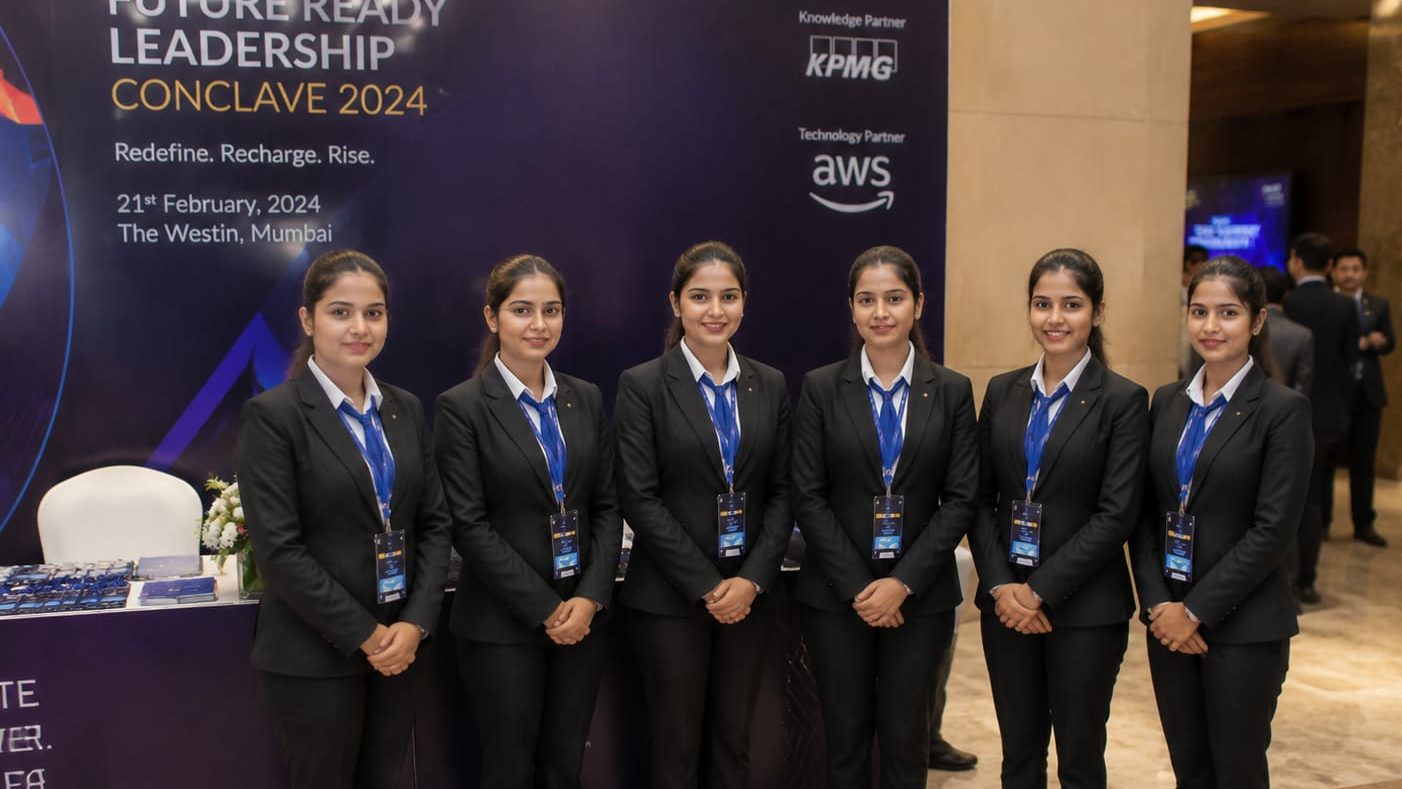
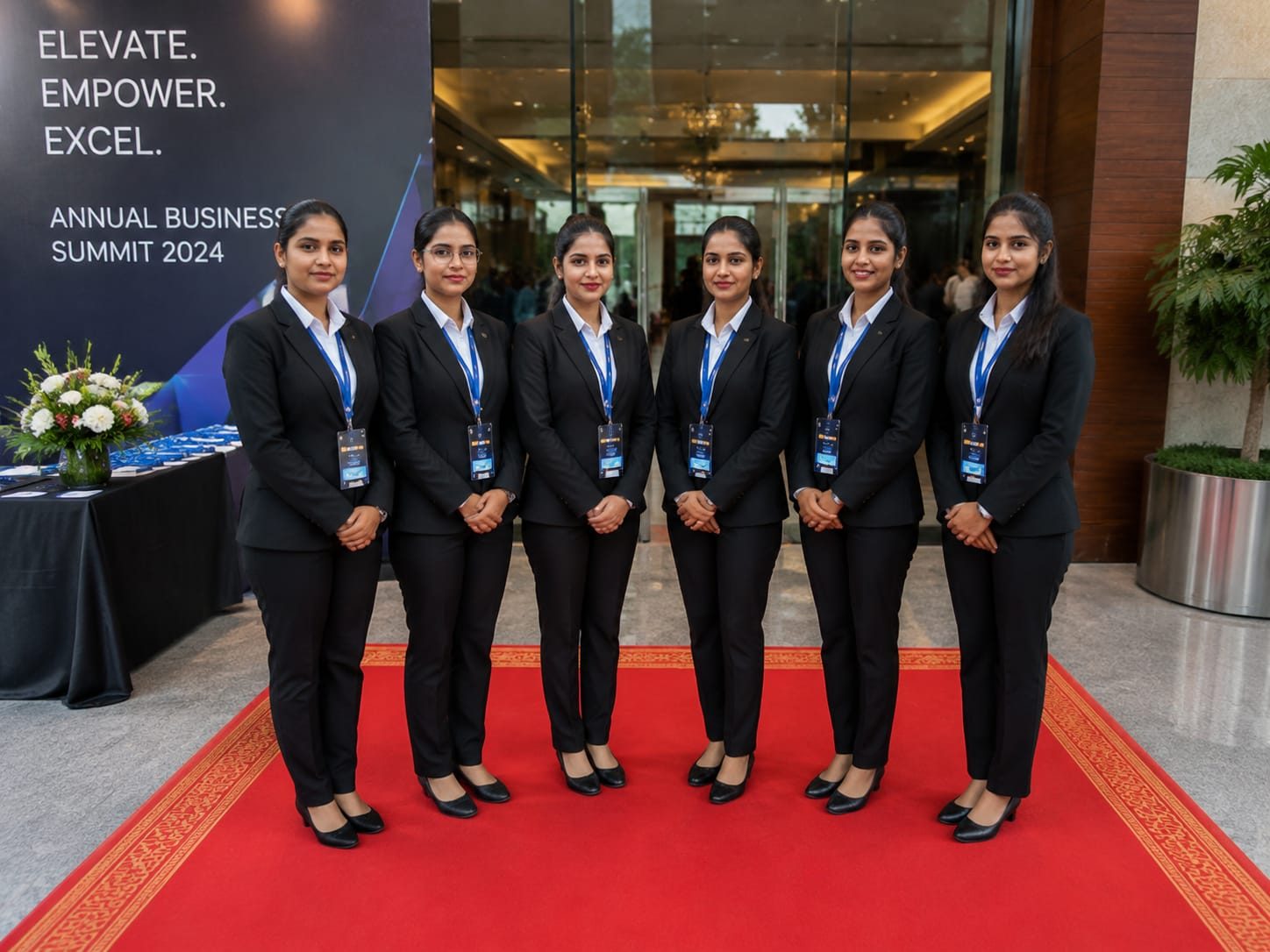
Uniform is the first thing a guest notices and the last thing event teams plan. When half the crew arrives in black shirts and half in navy, the front of house looks disorganised regardless of how well it is run.
Agree the standard in writing, confirm sizes before the event, and hold spare kit on site for replacements and late additions. Where the client supplies branded apparel, collect and check it early.
Uniform also needs an owner on the day. One person holding the spare kit and checking the standard at the start of each shift prevents small inconsistencies from becoming permanent ones.
Check the crew against the standard at the start of every shift rather than once on day one, and keep a short written note of who received spare kit. It is a small discipline, but it is the difference between a crew that looks like one team and a crew that looks assembled on the morning.
Mistake 6: one coordinator covering too much
A single coordinator managing registration, hospitality, valet, crowd flow and the client across a 500-guest event is a bottleneck waiting to happen. Every question queues behind one person, and that person cannot be in two halls at once.
Split the floor into zones and give each zone a lead who reports to the coordinator. Registration, hospitality and VVIP handling each need their own point of contact. The coordinator then manages the leads, not every individual.
This structure also gives you a clean escalation path. Crew know who to ask first, and the coordinator is only interrupted for decisions that genuinely need them.
- One zone lead per functional area
- Coordinator manages leads, not individuals
- Written escalation ladder in the crew brief
- Radio or group channel discipline agreed in advance
Mistake 7: skipping the debrief
The crew has just worked a long day, guests have left, and everyone wants to go home. The debrief gets cancelled. This is why the same staffing problems repeat at the next event.
Fifteen minutes is enough. Ask three questions: what backed up, what ran short, and what confused the crew. Capture the answers and keep them with the event file.
Over several events, those notes become your staffing baseline. They tell you which counter needs an extra position, which gate needs a greeter, and which role briefing needs rewriting. Store the notes with the event file and open them at the start of planning, not after the venue is booked. Assign one person to keep that file current, so the next staffing plan does not depend on anyone's memory.
How to avoid all seven
Convert each mistake into a line item on your staffing plan. Roles named, briefing sent in advance, peak mapped, replacement cover arranged, uniform confirmed, zone leads assigned and a debrief scheduled before the event even starts.
Then hand the plan to an event staffing partner who will challenge it. A good partner asks about the arrival curve, the VIP list and the reporting time, because those answers change the crew mix.
EventEdge Staffing runs event crews from 5 to 500 staff with briefed, uniformed deployment and live coverage in Bengaluru, Chennai, Mumbai, Delhi, Hyderabad and Kerala. Share the date, city, venue, roles and headcount and you will receive an itemised quotation, typically within two working hours subject to complete requirements.
Frequently asked questions
What is the most common event staffing mistake?
Briefing too late. When crew arrive without the venue, role, dress code and escalation path in writing, event day is spent explaining instead of executing.
How do I avoid staffing problems when a crew member does not report?
Work with a partner who keeps a bench of vetted replacements who already know the brief, and name one person on your side who is authorised to approve a replacement on event morning.
Should I book more staff to be safe?
No. Extra unbriefed people do not fix peak queues, because the constraint is usually counter positions or flow design. Define roles, then size each against the arrival peak.
How do I brief event staff effectively?
Send a written brief in advance covering venue access, reporting time, role description, dress code and escalation contact, then hold a short on-site walkthrough before doors open.
Is a post-event debrief really worth it?
Yes. Fifteen minutes covering what backed up, what ran short and what confused the crew gives you the specific adjustments that make the next event cheaper and easier to staff.