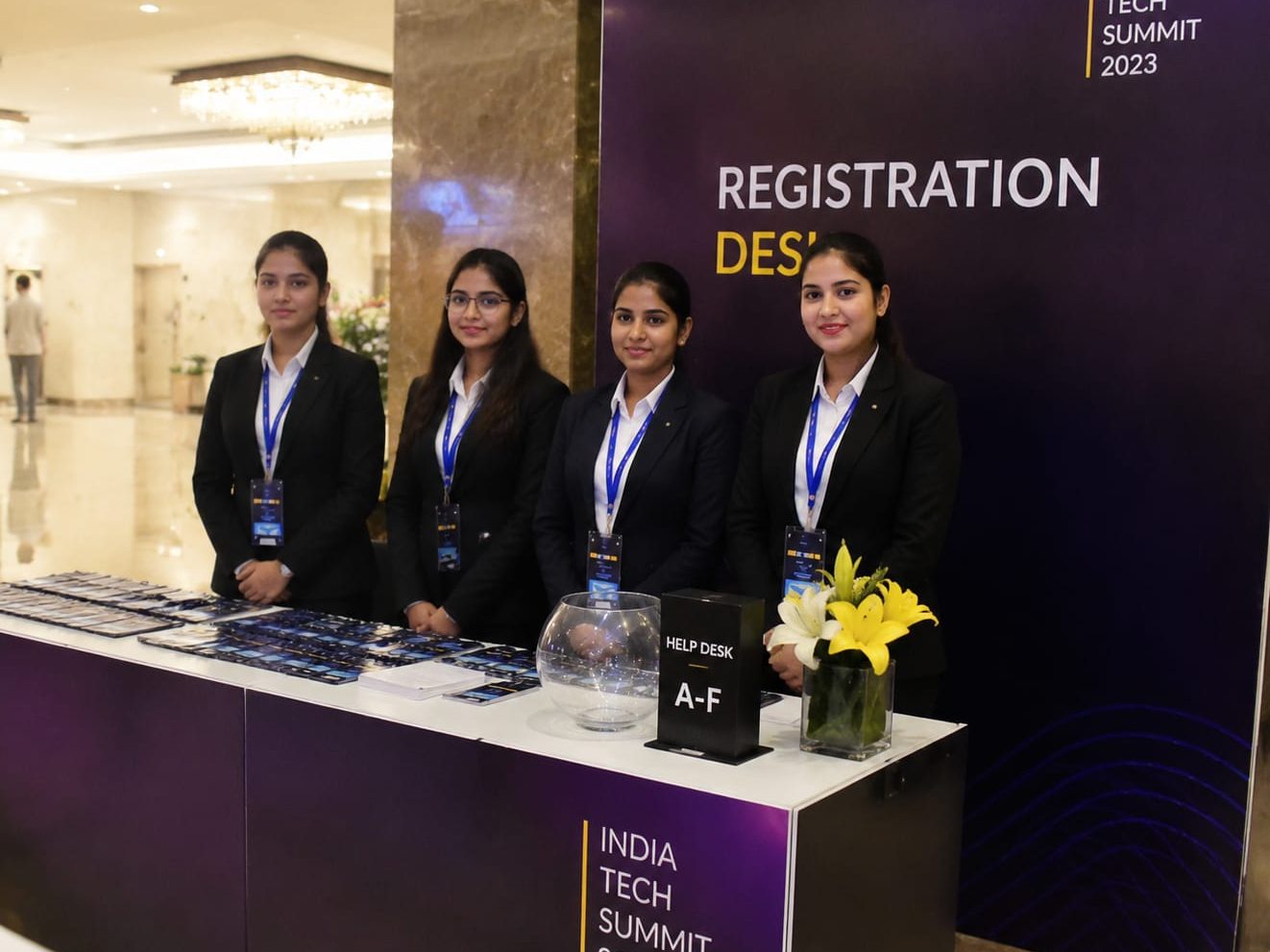
How to choose event staffing for a corporate event
Choosing event staffing for a corporate event comes down to four things: whether the agency can supply the right role mix, whether it briefs crew before they reach your venue, what happens when someone does not report, and whether you have one person to call on event day. Everything else — the pitch deck, the rate card, the assurances — is secondary.
Corporate events are unforgiving front-of-house. A leadership conclave, a dealer meet, an annual day or a product launch puts your guests past a registration desk, an usher and a hospitality team within the first ten minutes of arrival. That first impression is delivered by crew you did not hire yourself, which is exactly why the selection process deserves more attention than it usually gets.
This guide sets out how to evaluate an event manpower partner for a corporate event in the order that matters: requirement first, roles second, briefing third, commercials last.
Write the requirement before you compare suppliers
A staffing requirement is defined by the guest journey, not by a headcount someone estimated in a meeting. Before you speak to suppliers, put the essentials on one page: event type, date, city, venue, reporting time, expected footfall, arrival pattern, roles, dress code and the number of days.
If you only know the date and a rough number, that is still workable. A serious partner will help you structure the requirement — how many registration counters the entrance needs, how many ushers per hall, whether arrivals cluster into a thirty-minute window — before quoting. That structuring conversation is the first real test of whether the agency understands events or simply resells manpower.
- Event type, date, duration and number of days
- City, venue and venue access details
- Expected footfall and arrival pattern
- Roles required and reporting time for each
- Dress code and uniform expectation
- Language requirements and guest profile
- VIP, media, sponsor and press zones
Match roles to the guest journey
Map every role to something a guest actually experiences. Arrival needs valet and crowd crew. The door needs registration. The hall needs ushers. The lounge needs hospitality staff. The stage needs a host or anchor. A corporate event usually combines four to six roles, and the mix changes by day.
Conference day one is heavy on registration. Day two is heavy on floor support and session ushering. An award night is heavy on guest relations and VVIP handling. Give the agency a day-wise role mix rather than one flat number, because a crew built for check-in will not cover a seated dinner well.
- Valet and arrival crew — traffic, parking and drop-off flow
- Registration desk teams — check-in speed and badge issue
- Ushers and floor crew — hall directions and session timing
- Hospitality staff — lounge, F&B and delegate service
- Guest relations and VVIP handling — protocol and discretion
- Crowd management — queues, entry flow and pinch points
- Event coordination support — one on-site point of contact
Ask these questions before you book
Five questions will tell you more than any brochure. How do you brief the crew? What happens if someone does not report? Who is my single point of contact on event day? How do you handle a headcount change forty-eight hours out? Can you show me photographs from events like mine?
Ask for the answers inside the written proposal, not in conversation. Verbal assurances do not survive a change of coordinator, and a new coordinator is exactly when you need the process to be written down and repeatable.
A partner that answers these clearly is operationally mature. A partner that deflects is usually brokering your requirement to a contact list it does not control.
- How briefing is delivered, and when it happens
- The replacement process for no-shows on event day
- Your named on-site coordinator
- Experience with your event type and your venue
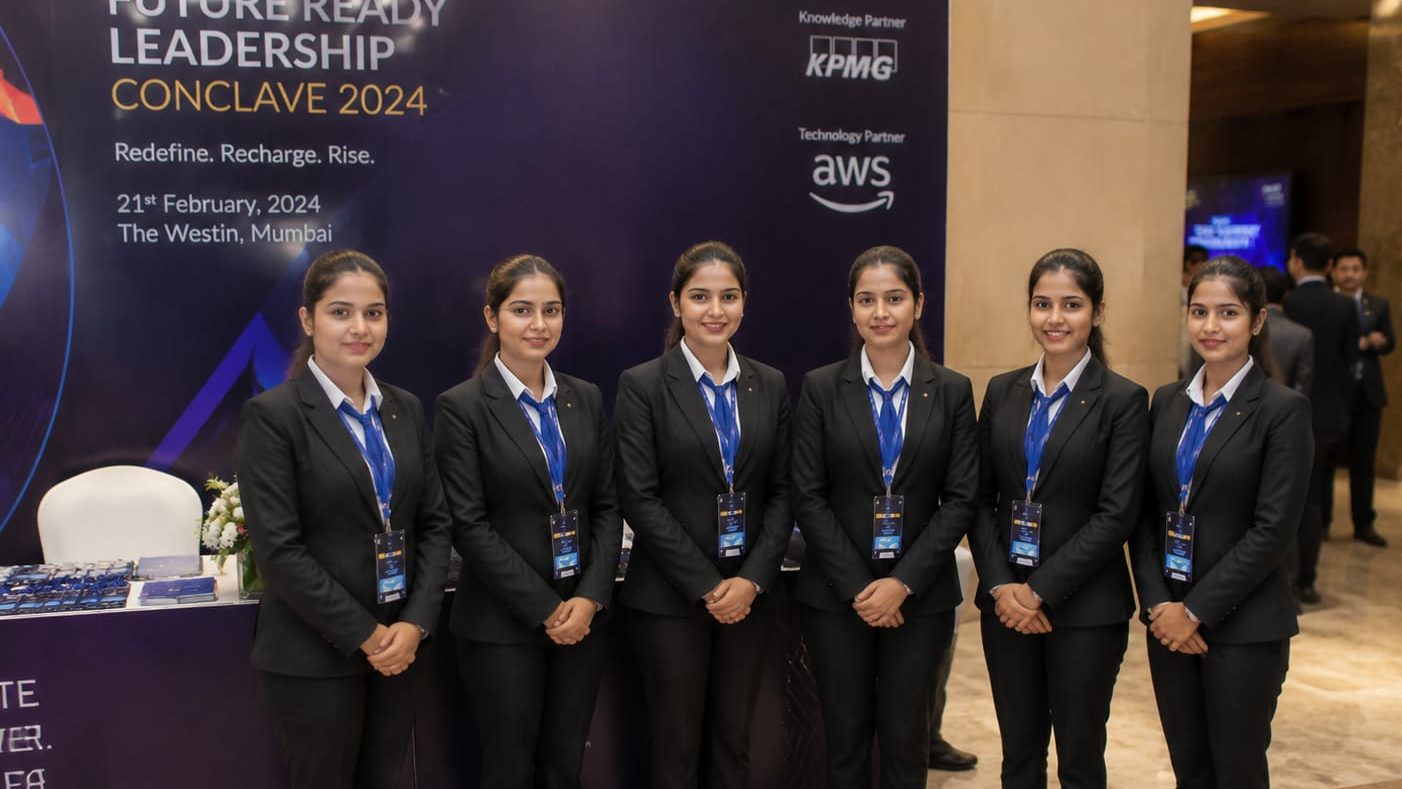
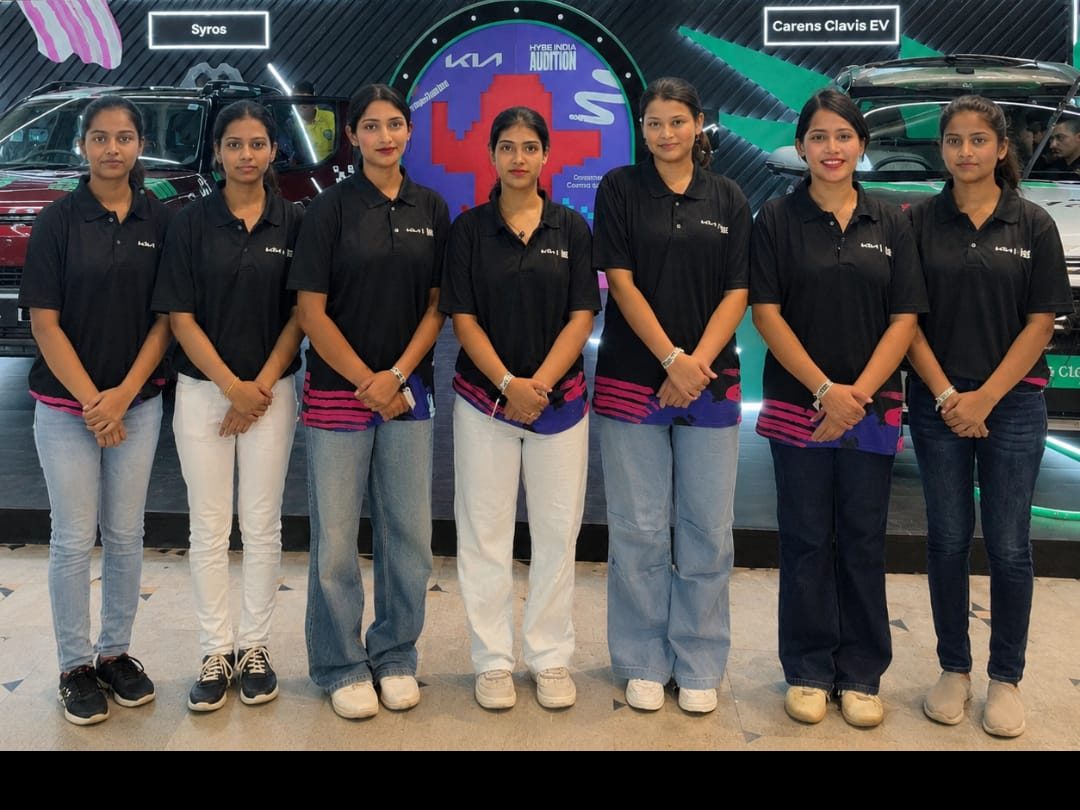
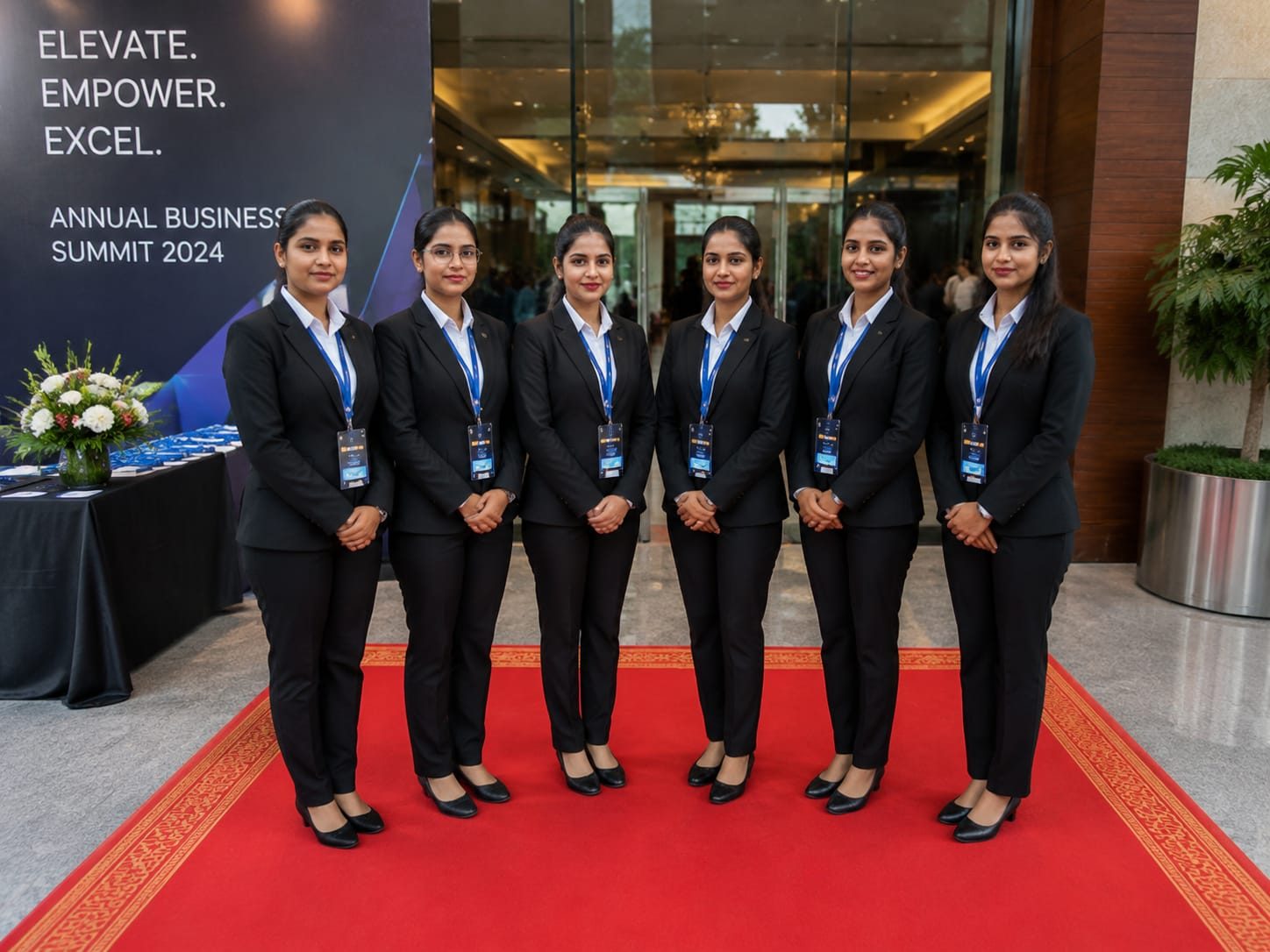
- Real deployment photographs rather than stock imagery
What a proper briefing should actually mean
Briefing is the part most buyers under-specify. A crew that arrives knowing the plan starts executing immediately. A crew that arrives cold starts asking questions during your registration rush — usually at the counter, in front of your guests.
A proper corporate event briefing covers five things: how to reach the venue and get inside, what the role does hour by hour, what to wear, who to escalate to, and what the guest-facing standard is. It should also cover the language your guests will use and any sponsor, media or photography protocols that apply on the floor.
EventEdge briefs every crew before deployment — venue notes, role cards, dress code and the escalation path — so that event day begins with execution rather than explanation.
- Venue access and the exact reporting point
- Hour-by-hour role, including the quiet periods
- Dress code and the uniform standard
- Escalation path and the named coordinator
Agency crew versus freelancers for a corporate event
Freelance crew work well for a small, senior requirement you already understand in detail. They work badly at forty people across three days, because the coordination load lands on your event team during the week you can least absorb it.
The table below is the comparison most corporate event teams end up making. Read it against your own headcount and the number of days, not against a single small event.
Whichever route you take, decide it early rather than two weeks before the event. Switching models late means re-briefing every person, re-issuing uniforms and rebuilding a reporting schedule the venue has already seen. An agency absorbs that work across its bench; a freelance list does not, because every crew member has to be contacted, confirmed and briefed individually.
| Consideration | Freelance crew | Event staffing agency |
|---|---|---|
| Coordination load | Fully yours | Handled by one coordinator |
| Briefing consistency | Depends on each individual call | Standard briefing before deployment |
| No-show cover | You source a replacement | Bench replacement from briefed crew |
| Uniform consistency | You police it on the day | Managed to a single standard |
| Scaling from 10 to 200 | Rebuild the list | Bench depth already in place |
| Multi-city events | Rebuild in every city | Live coverage across six cities |
What drives the cost of corporate event staffing
Corporate event staffing is priced per person, per day. The number moves with the role, the city, the shift length, the headcount, the number of days, the briefing and supervision scope, and how much lead time you give the agency.
A host, an anchor or a VVIP handler carries a different rate from general event crew. An overnight shift is not priced like a six-hour morning. A multi-day show spreads briefing and uniform costs across the days, which is why day three rarely costs the same as day one.
Do not budget against a headline figure. Ask for an itemised quotation mapped to roles, headcount and days, so you can see exactly what changes when you add a second registration counter or extend the shift by two hours.
- Role and skill level required
- City, venue and travel distance
- Shift length and break cover
- Headcount and crew-to-supervisor ratio
- Number of event days
- Lead time before deployment
Red flags worth walking away from
Three signals should end the conversation early. A quotation with no role breakdown. A refusal to name who supervises the crew on site. A promise that nothing can go wrong.
A credible partner will tell you what can go wrong — a no-show, a delayed venue handover, a gate that was not opened on time — and what the process is when it does. That is not pessimism. It is the difference between an agency that manages risk and one that manages the conversation.
Ask specifically what happens if the venue hands over the hall late. Corporate events often lose setup time before the crew even reports, and a partner that has planned for that will re-sequence positions rather than wait for instructions from your team.
Where to start with your corporate event
Start with the requirement, not the rate card. Write down the date, city, venue, reporting time, roles and a realistic headcount. If the headcount is uncertain, say so — it is normal, and the number can be structured from the venue layout and the arrival curve.
Write it down even if it is incomplete. A partially written brief is a better starting point than a phone call with no details at all, and it gives your staffing partner something concrete to challenge.
From there the process is short: requirement review, staffing assessment, availability check, proposal, then coordination with your event team in the days before deployment. You can see the full sequence on our how it works page, or send the brief straight through to request a quotation.
For most corporate events in Bengaluru and our other live cities, an itemised quotation is returned within two working hours once the requirements are complete.
- Event type, date, city, venue and reporting time
- Roles required, with a headcount for each
- Number of days, including build-up and move-out
- Guest profile, language and VIP protocols
Frequently asked questions
What should I send to get a corporate event staffing quotation?
Send the event type, date, city, venue, reporting time, expected footfall, roles required, dress code, number of days and any VIP or media protocols. Itemised quotations are typically returned within two working hours once the requirements are complete.
How many staff will my corporate event need?
It depends on footfall, arrival pattern, venue layout and the roles you need. Crews scale from 5 to 500 staff per event, and the number is best structured from the guest journey rather than a flat ratio.
Can you staff a corporate event outside Bangalore?
Yes. EventEdge is headquartered in Bengaluru with live coverage in Chennai, Mumbai, Delhi, Hyderabad and Kerala, and is expanding into Kolkata, Pune and Goa.
What happens if a crew member does not report on event day?
A staffing agency holds a bench of briefed crew so a replacement can be deployed. Ask any supplier to describe this process in writing before you confirm the booking.
Do you plan corporate events as well as staff them?
No. EventEdge provides event staffing, manpower and coordination support. Event planning, creative, production and decor stay with your event team or planner.