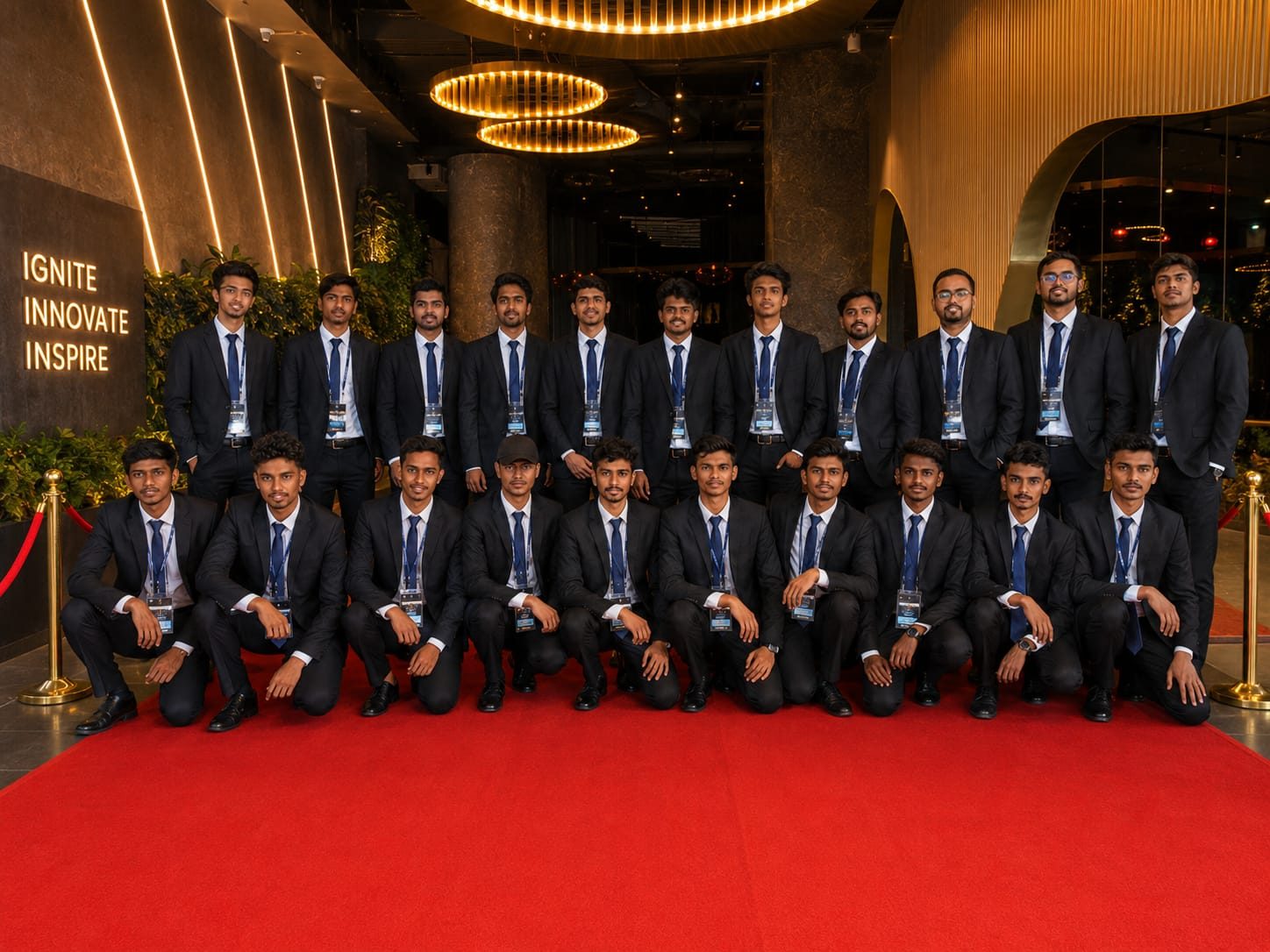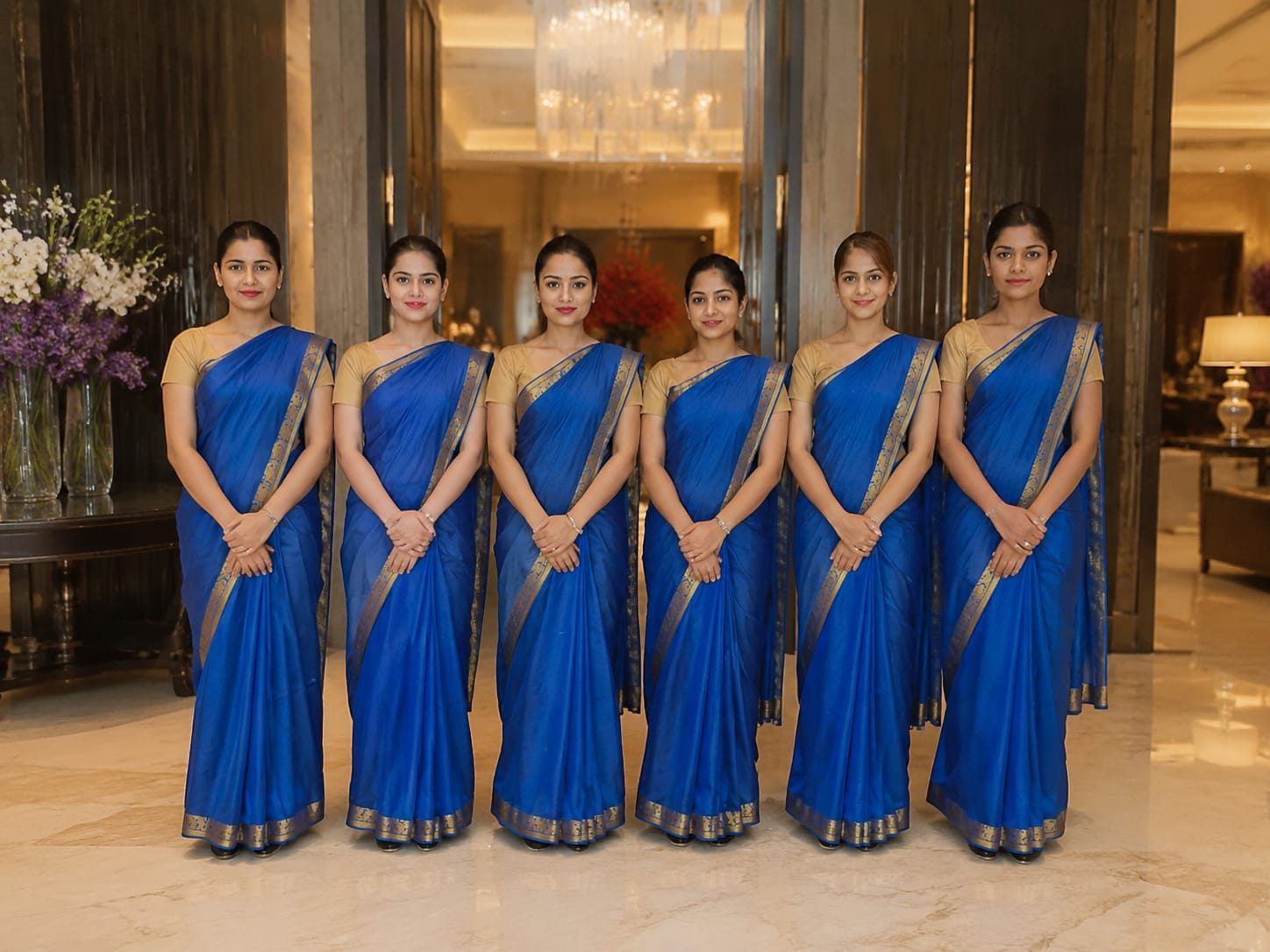

The short answer: 500 guests sets the scale, not the headcount
There is no single correct number of staff for 500 guests. Two events with the same guest count can need very different crews: a 500-delegate conference with a single morning registration peak, a 500-guest award night with plated dinner service and a 500-guest wedding with a valet queue all pull on different roles at different times.
What you can do is build the number systematically. Estimate the arrival curve, then apply planning guidance ratios to registration, guest-flow, hospitality, valet and crowd management, then add coordination and float cover.
Everything on this page is planning guidance. It is a way to structure a conversation with your venue and your staffing partner. It is not a quotation and not a guarantee of any headcount, cost or outcome.
The four variables that decide your headcount
Four variables decide the headcount, and guest count is not one of them on its own. Work through them in order before you multiply any ratio by 500.
Arrival pattern is the most commonly ignored of the four. 500 guests arriving across three hours need far less registration capacity than 500 guests arriving in a single 30-minute window before a keynote.
Map all four before you multiply a ratio by your guest count, because the ratios only work once the shape of the event is clear.
- Arrival pattern - size the desk for the peak window, not the full evening
- Service level - a hosted welcome and escorted seating need more hands than self-service check-in
- Venue geometry - entrances, staircases, lifts and zones decide how many positions you must occupy
- Role mix - hospitality for plated service, valet crew for arrivals, promoters for display areas
Planning guidance ratios for a 500-guest event
The table below is the practical starting point. Treat each row as a planning baseline to be adjusted for your arrival pattern, programme and venue, then confirmed with a staffing partner.
Use it to sense-check a requirement you have been given, or to build one if you are starting from nothing. Do not treat any single row as a fixed rule - a two-counter registration set-up and a six-counter one can both be correct for 500 guests in different circumstances.
Read the table with your own arrival pattern in mind. A conference with one morning rush and a wedding with a two-hour staggered arrival can carry the same guest count and still need very different crews. Treat each row as the start of a conversation rather than a specification.
| Staffing area | Planning guidance ratio | What drives the number |
|---|---|---|
| Registration counters | 1 counter per 40-60 peak-window guests, with 1-2 people per counter | Peak arrivals per 15 minutes and check-in time per guest |
| Ushers and guest-flow | 1 usher per guest-flow zone, about 1 per 50-75 seated guests | Entrances, staircases, lifts and seating zones to cover |
| Hospitality staff | About 1 staffer per table, or 1 per 8-10 covers | Table size, plated service and the drinks model |
| Valet and arrival crew | 1 valet per 25-40 peak-window cars | Car-sharing ratio, parking distance and drop-off layout |
| Crowd management | 1 marshal per pinch point, plus float cover | Entry flow, queues, VIP movement and exit timing |
| Guest relations and VVIP | 1 handler per 8-10 VIP guests or per zone | Protocol needs and green-room movement |
| Crew coordination | 1 crew lead per 15-25 crew on site | Positions, shift pattern and reporting points |
Registration counters: size from the arrival rate
Registration is where 500 guests become visible as a queue. The planning mistake is to divide 500 by the length of the event. Look instead at how many guests arrive in the busiest 15 to 30 minutes.
If your programme starts at 7pm and guests arrive between 6:30pm and 7pm, that half hour is what your counters must absorb. Multiply the peak arrivals by the average check-in time, then divide by the minutes you are willing to make a guest wait.
That calculation tells you the counter count. Each counter then needs one or two people depending on the workflow. See registration desk teams for the role split behind a counter.
- One lane for pre-registered guests and one for walk-ins
- A separate VIP or speaker lane to protect the main queue
- A float executive to pull guests out of the wrong lane
Ushers and guest-flow zones
Ushers are a positional cost, not a per-guest cost. 500 guests in one hall with two entrances need far fewer ushers than the same 500 guests spread across a foyer, two halls, a mezzanine lounge and an exhibition area.
Walk your venue and count every position that must be occupied the moment doors open. That gives you the minimum usher count, and the ratio per seated guest becomes a sanity check rather than the starting point.
Where guest numbers rise, ushers are the first role to add and the easiest to justify, because they are the difference between a guest finding their seat and a guest asking three different people for directions.
- Each entrance and staircase head
- Each lift lobby and corridor junction
- Each seating block edge and aisle
- Each transition point between zones
Hospitality staff per table
For a seated dinner, hospitality is planned per table rather than per guest. A 500-guest banquet at ten covers per table is 50 tables. The table count, the service style and the drinks model decide the crew.
Plated service needs more hands than a buffet because food has to move to a fixed position at a fixed time. A hosted drinks service needs people moving through the room, and a VVIP area needs staff who do not leave it.
Add a captain for each block of tables so the floor has a chain of command; without one, hospitality staff queue at the same question instead of serving the room.
- One captain per block of tables, plus one overall floor lead
- At least one float per service zone for refills and gaps
- Water and beverage service planned separately from food service
Valet, arrival and parking capacity
Valet capacity is decided by cars, not guests, and by the distance between the drop-off point and the parking area. Two guests arriving in one car halve the arrival volume; a parking area ten minutes away doubles the round trip.
Plan from the peak arrival window as well. If most guests arrive in a 45-minute band, that is the band your valet crew has to clear. Add a parking marshal at the lot, not only at the drop-off, because the queue usually forms where cars are parked rather than where they are handed over.
For wet-weather contingency or a venue with a single access road, plan additional crowd management at the drop-off so that the valet queue does not block the road.
Crowd management, pinch points and float cover
Crowd management is planned per pinch point rather than per guest. Doors, stairs, lift lobbies, washroom corridors, bar counters and the exit route are the places where 500 guests stop moving smoothly.
Walk the guest journey in reverse: exit, washroom, bar, hall, registration, drop-off. Each stop is a position. Then add float marshals who are not tied to a point, because the queue is never where you predicted it.
Build in the transitions too. The movement from drinks reception into the hall is usually the single most compressed two minutes of a 500-guest evening, and it is rarely staffed for. Outdoor and marquee venues also add positions that no guest count predicts, because weather cover, separate entry points and a longer walk from parking each need someone standing there.
A planning illustration for 500 guests
The arithmetic below is an illustration of how the ratios combine for a 500-guest corporate evening with registration, a seated dinner and valet parking. It is a planning estimate only, not a quotation, and it changes with the venue and the run-of-show.
A planner might model four to five registration counters with two people each, six to eight ushers across the hall zones, hospitality sized to roughly 50 tables plus captains, valet crew sized to the peak car count, and three to four marshals on pinch points.
That structure is then checked against the venue, the reporting times, the VIP count and the service style before the crew mix is confirmed.
- Registration: counters sized to the peak arrival window
- Guest-flow: ushers per occupied position, not per guest
- Hospitality: per table, plus captains and floats
- Arrival: valet per car, marshal at the parking lot
What changes the number after you have estimated it
Several things move a 500-guest plan up or down after the first estimate. Shift length matters: a six-hour evening is not staffed like a twelve-hour exhibition day, and long shifts require relief cover.
Language requirements, the number of VIPs, media presence, a sponsor zone and any live broadcast add positions that no guest-count ratio predicts. A venue with multiple floors or a long walk from parking adds both usher and valet positions.
Ratios get you to a credible first draft in twenty minutes. Confirming the crew requires the venue, the run-of-show and the reporting times. Anything that adds a position adds a role to the brief. Send those to request a staffing quotation and you will get an itemised plan rather than a single number.
Frequently asked questions
How many staff do I need for a 500-guest event?
It depends on the arrival pattern, role mix, service level and venue layout. The ratios here are planning guidance to build a draft, not a headcount or a quotation.
How many registration counters should I plan for 500 guests?
Size counters from the number of guests arriving in the peak arrival window, not from the total. Planning guidance suggests roughly one counter per 40-60 peak-window guests, with one to two people per counter.
How many hospitality staff do I need for a 500-guest dinner?
Plan per table rather than per guest. A common planning baseline is about one hospitality staffer per table, roughly one per 8-10 covers, plus captains and float cover.
How many valet staff are needed for 500 guests?
Valet is planned per car, not per guest. Planning guidance suggests roughly one valet per 25-40 cars in the peak window, adjusted for parking distance.
Are these ratios a quotation?
No. They are planning estimates to help you scope a requirement. Pricing and final headcount are confirmed in an itemised quotation once the date, city, venue, reporting times and role mix are known.