The short answer: stage ownership versus guest ownership
An emcee is the voice of your stage. They open the event, introduce speakers, hold the agenda and keep the programme to time. Their working document is the run-of-show; their performance is measured in minutes saved and gaps avoided.
A corporate event host owns the guest experience. They welcome arrivals, move VIPs, connect guests to the programme and make sure the room feels looked after. Their working document is the guest list and the floor plan, and their performance is measured in how smoothly the room moves.
One role is heard; the other is felt. On a small event one skilled person can carry both. On an awards night, a large conference or a product launch, splitting them is usually the difference between a stage that runs and a room that works. See hosts and anchors for how EventEdge deploys both.
What an emcee is responsible for
The emcee's job begins before the event and is largely invisible in the finished programme. They learn the agenda, the speaker names and designations, the pronunciation of every name and the exact order of every segment.
On stage they own the microphone: opening, welcome, housekeeping announcements, speaker introductions, prize or award announcements and the close. They also cover the gap when a speaker is not ready, which is a skill in itself.
A professional emcee does not improvise the agenda. They work to a script approved by the event team and change it only when asked.
- Read the run-of-show and confirm every segment timing
- Introduce speakers with correct names, titles and pronunciation
- Hold the agenda and flag overruns to the event team
- Cover unplanned gaps without dead air
What an event host is responsible for
The host's job happens across the venue rather than at the podium. They are the person who greets the chief guest, notices that a sponsor's table is empty, and introduces people who should meet.
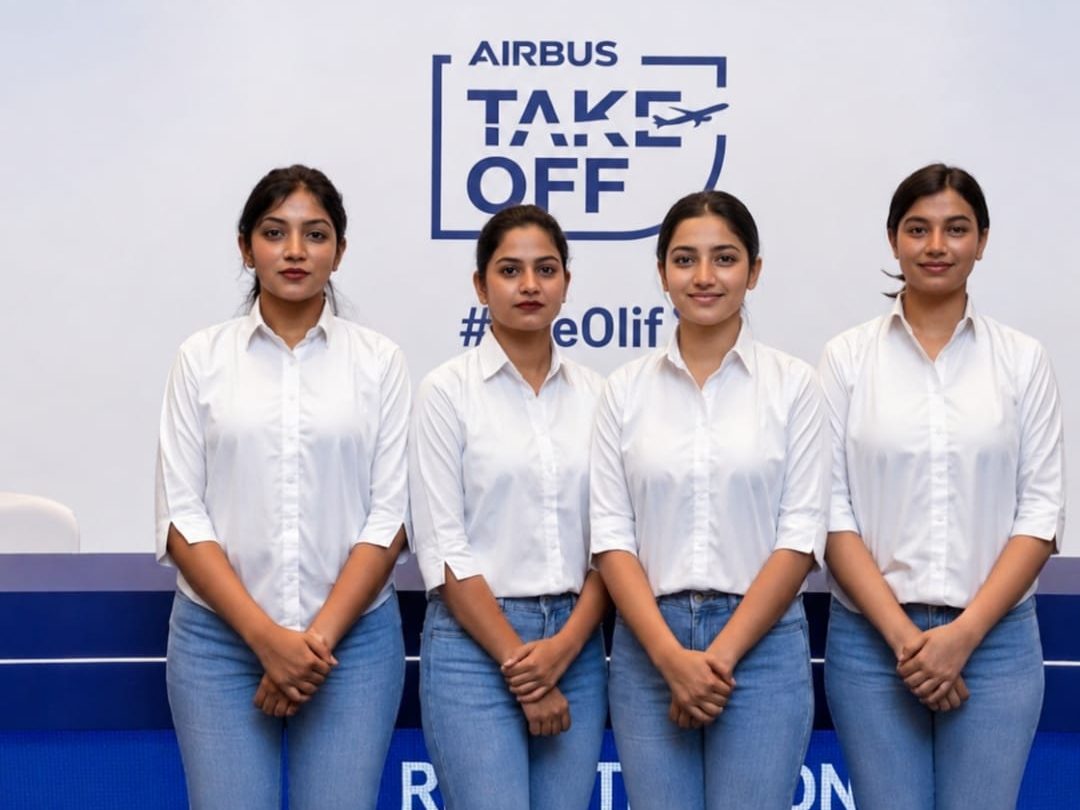
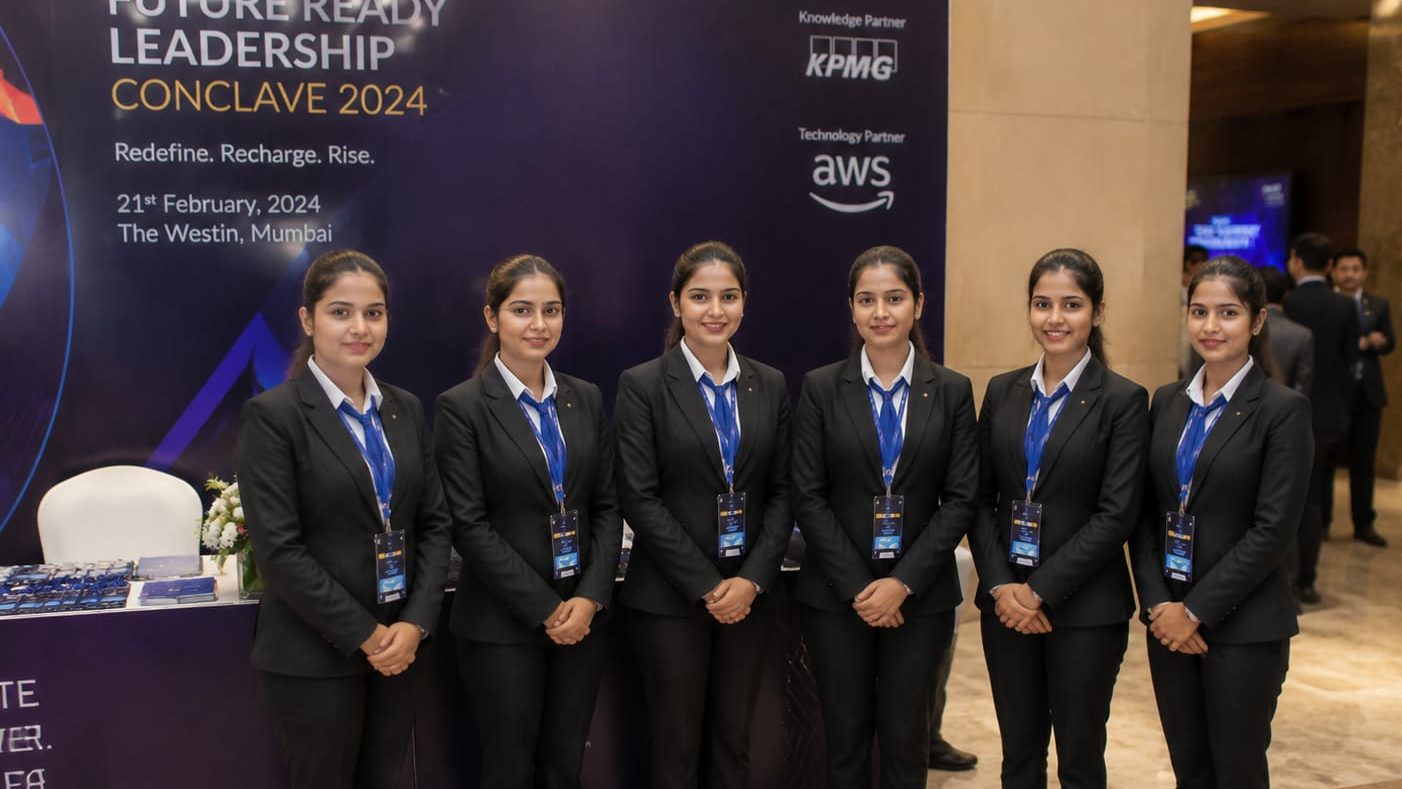
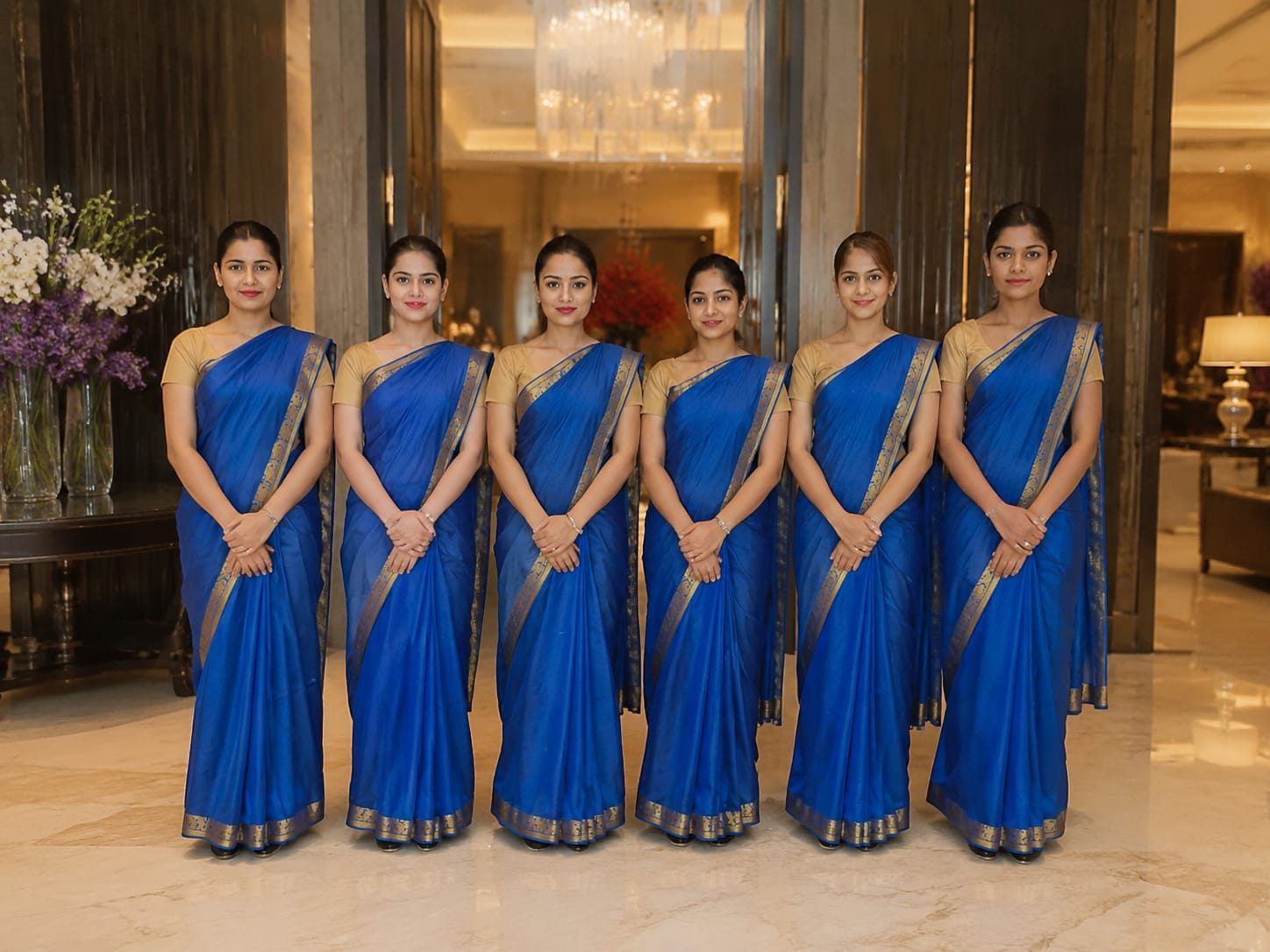
In Indian corporate usage the word host is also used loosely for front-of-house hostesses and greeters. That is a different role again - the hosted welcome and escort function - and it is usually staffed as part of the guest relations and VVIP crew rather than as a single named host.
The distinguishing feature of a host is continuity. They stay with the guest journey from arrival to departure, while the emcee's attention moves with the programme.
- Own the arrival experience and the guest journey
- Manage VIP protocol, seating and green-room movement
- Coordinate with registration, hospitality and ushering teams
- Keep the event team informed of what is happening on the floor
- Handle sensitive guest situations quietly and early
- Bridge guests and programme without going on stage
Emcee and host side by side
The two roles overlap in the middle of the event and separate at the edges. The table below shows where each one actually spends the day.
Use it as a planning tool rather than a strict rule. On a 150-guest leadership dinner the overlaps will dominate; on a 1,500-guest awards night the separation becomes obvious within the first hour.
The overlap sits in arrivals and transitions, when the host is on the floor and the emcee is preparing to open. The separation sits in the programme itself, when the emcee is live and the host is managing the room behind the stage. Neither role can cover the other's peak, and that is the strongest argument for staffing both on a large event.
| Dimension | Emcee | Event host |
|---|---|---|
| Primary focus | Programme and agenda | Guests and guest experience |
| Working document | Run-of-show and speaker brief | Guest list, VIP list and floor plan |
| Place of work | Stage, podium or microphone point | Throughout the venue, front to back of house |
| Key skill | Scripted delivery, timing and composure | Situational awareness and relationship handling |
| Peak pressure | Live, in front of the full room | Before doors open and during arrivals |
| Success looks like | Programme on time, no dead air, correct introductions | Guests looked after, VIPs handled, no visible scramble |
| Works most closely with | Event manager and AV team | Registration, hospitality, ushering and VVIP crew |
The skills that separate them
An emcee needs voice, presence and the ability to hold a room for two hours without losing energy. They need to be comfortable with a script and equally comfortable abandoning it for thirty seconds when something goes wrong. Language fluency matters, and so does being able to say a name correctly the first time.
A host needs peripheral vision. The best hosts notice a problem three minutes before it becomes visible: a table without a host, a speaker waiting at the wrong door, a guest who has been standing alone since arrival.
It is rare to find one person who does both at a high level. Stage confidence and floor instinct are different temperaments, which is why the strongest events usually have two names on the crew sheet rather than one.
When one person can carry both roles
For a small corporate event - a leadership dinner, an internal town hall, a 100-guest launch - one host-emcee can work well. The programme is short, the guest list is known and the transitions are few.
It works when the event has a single room, a single stage, no significant VIP protocol and no parallel sessions.
The limit is arithmetic. If the host role requires presence at the door during arrivals and the emcee role requires presence on stage at the same time, one person cannot be in both places. At that point the roles have already split themselves, whether or not you have written two names on the sheet.
- One room and one stage, with no parallel activity
- A programme under roughly two hours
- No formal VIP or protocol requirement
- A familiar audience and a known guest list
- No press, broadcast or live-stream obligations
When a corporate event needs both
Add any of the following and the two roles should be staffed separately: a formal VIP or chief-guest protocol, an awards segment with multiple categories, parallel sessions, a sponsor zone, press or live coverage, or an arrival window where most guests reach the venue at once.
Awards nights are the clearest case. The emcee is locked into the stage sequence, reading categories and holding speeches to time, while the host is backstage managing winners and escorting the chief guest.
Multi-day conferences are the second case. On day one the emcee holds the plenary while the host manages a separate VIP track. Neither can cover the other without abandoning a position.
- Awards ceremonies with multiple categories and winners
- Events with a chief guest, VIP or protocol list
- Multi-track conferences and parallel sessions
- Launches with press, media or live coverage
- Shared arrival windows with heavy guest volume
How to brief each role
Most host and emcee problems on event day trace back to a briefing that was given once, to one person, and assumed to cover both roles.
Brief the emcee from the programme: the running order, exact timings, speaker designations, sponsor mentions, pronunciation notes and the escalation rule for overruns. Brief the host from the guest side: the guest list, VIP arrival times, seating plan, green-room schedule, VIP protocol and the floor plan.
Both briefings should end with the same two pieces of information: the reporting time and the name and number of the event-day coordinator who can make a decision.
- Emcee brief: run-of-show, timings, speaker list, sponsor mentions, pronunciation, overrun rule
- Host brief: guest list, VIP arrivals, seating plan, green room, protocol, floor plan
- Shared brief: reporting time, dress code, escalation contact, guest-facing standard
How many hosts and emcees do you need?
As a planning baseline, one emcee covers one stage running one continuous programme. Add a second emcee when you have parallel stages, two languages or a programme longer than roughly three hours that needs a handover.
Hosts scale with zones and VIP volume rather than with guest count alone. A single host can manage one arrival area and one VIP group; multiple entry points, a green room and a sponsor zone each need their own cover.
These are planning estimates, not a quotation. Confirm the count against your venue, guest flow and protocol list before you lock a crew. For a multi-track conference, plan one emcee per stage running a continuous programme and one host per entry point and VIP group, which is four people before the rest of the crew is counted.
Where to start
Decide in this order: what the programme needs, what the guests need, then how many people are needed to cover both without anyone standing in two places. That sequence prevents the most common mistake, which is hiring a good stage voice and expecting them to run the floor as well.
Send EventEdge the date, city, venue, programme outline and guest profile. We will confirm whether the event needs one host-emcee or two separate roles, along with the rest of the crew mix, and return an itemised staffing plan - typically within two working hours, subject to receiving complete event requirements. If you are unsure whether the event needs one host-emcee or two separate roles, say so in the brief; that decision is easier to make from the programme than from the guest count.
Frequently asked questions
What is the difference between an emcee and a host?
An emcee runs the stage programme: opening, introductions, transitions, announcements and timing. A host owns the guest experience: arrivals, VIP movement, guest journey and floor coordination.
Can one person be both host and emcee?
Yes, on smaller events with one room, one stage, a short programme and no formal VIP protocol. If the arrival window overlaps the programme start, the two roles should be staffed separately.
When does a corporate event need both a host and an emcee?
When there is a chief guest or protocol list, an awards segment, parallel sessions, media coverage, or a heavy shared arrival window. Awards nights and multi-day conferences almost always need both.
What should be included in an emcee brief?
The run-of-show with exact timings, the speaker list with correct designations and pronunciation, sponsor mentions, housekeeping announcements, the overrun rule and the event-day escalation contact.
How many emcees do I need for a multi-stage conference?
Plan one emcee per stage running a continuous programme. Add another for a second language requirement or a programme longer than roughly three hours. Confirm the final count against your programme before locking the crew.