What an exhibition staffing checklist must cover
An exhibition staffing checklist covers four things: how visitors get in, how they move through the hall, how exhibitors and their guests are supported, and how the show closes and packs down.
Exhibitions differ from conferences because of volume and repetition. A conference moves a known guest list through once. An exhibition pushes thousands of visitors through registration across several days, with badge checks at multiple points and aisles that clog the moment one stand becomes popular.
That makes the staffing brief a flow plan rather than a guest plan. Positions are defined by what they keep moving, and headcount is set by the peak entry window on the busiest day.
- Visitor registration and badge issue
- Hall entry, re-entry and badge checks
- Aisle and stand crowd management
- Booth staff and lead capture for exhibitors
- VIP delegation, buyer and media handling
- Breakdown and final-day support
Pre-show: passes, hall access and setup day
Exhibition staffing starts on setup day. Crew need venue access, exhibitor passes and a clear understanding of which doors are for whom before the public arrives.
Confirm access rules with the organiser: where crew enter, when the hall opens for setup, which gates exhibitors use for material movement, and how re-entry is handled for staff working multiple shifts. Access confusion on setup day eats into the hours you need for positioning and rehearsal.
Issue passes early and keep a record of who holds what. On multi-day shows, a single missing pass becomes a daily problem that nobody owns.
- Crew passes issued and logged before day one
- Exhibitor and material movement gates identified
- Setup day reporting time and access route confirmed
- Re-entry process for shift changes briefed
- Venue safety and emergency procedure covered
Registration and visitor check-in at scale
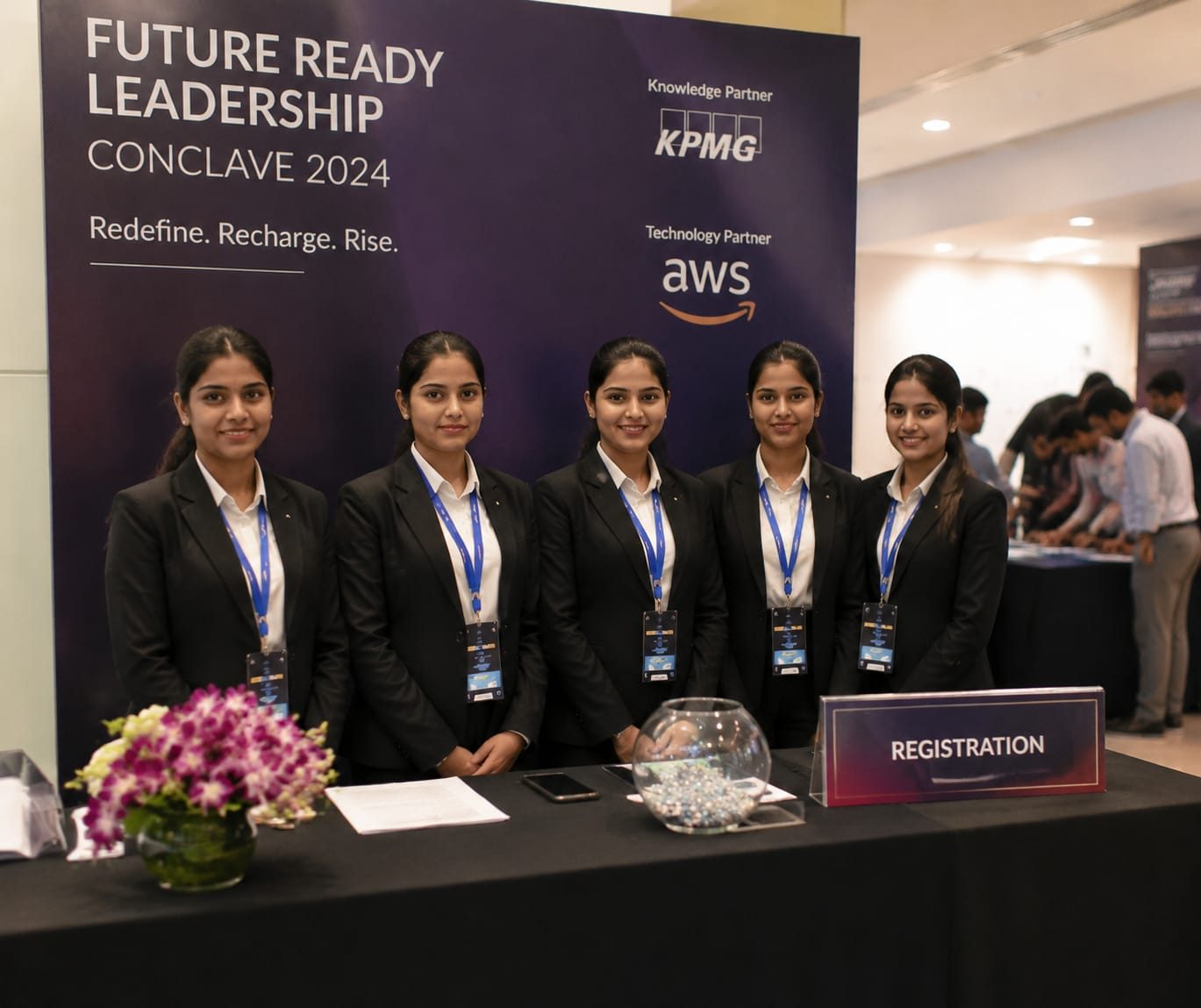
One queue for every visitor is the fastest way to create a visible problem at an exhibition. Visitors arrive in bursts, and pre-registered badge holders should never share a line with on-site registrants.
Split the entry by visitor type and staff each line separately. The table below shows the positions that keep a hall entry moving through a peak window.
Badge printing speed, scanner reliability and the hall's physical layout all change the number you need. Plan a help desk position regardless, because duplicate badges and corrections are practically certain at every show. Place the help desk where it can see the queue without sitting inside it. A guest with a badge problem needs somewhere to step aside, and a help desk buried among the counters slows every visitor behind it.
| Entry position | Handles | Staffing note |
|---|---|---|
| Pre-registered badge collection | Scan of confirmation, badge issue, lanyard | Largest share of counters at the peak window |
| On-site registration | Walk-in registrants, data entry, payment or approval | Separate queue; slower per visitor, so size generously |
| VIP, buyer and media desk | Priority entry, escort to meetings, press kits | Kept off the main floor with a named handler |
| Help desk | Duplicate badges, corrections, exhibitor queries | One senior staff member with authority to resolve |
| Hall entry and re-entry | Badge checks at doors and returns from breaks | Positioned inside the hall, not in the doorway |
Booth staffing and lead capture
Exhibitor booth staff are a separate requirement from organiser crew, and mixing the two creates confusion about who is responsible for what. Organiser crew manage the hall; booth staff manage the stand.
Where EventEdge supplies booth staffing, the brief comes from the exhibitor: who the buyer profile is, what the qualifying questions are, and how leads are captured. Promoters on a booth need the product conversation and the close, not just the stand layout.
Make one person own data capture on the stand. When everyone scans badges and nobody checks the records, leads arrive incomplete and the follow-up team pays for it after the show. Agree the qualifying questions with the exhibitor before the doors open, and check the first day's records that evening rather than at the end of the show.
Hall flow, aisles and crowd management
Aisles are where exhibitions fail. One popular stand creates a bottleneck, the bottleneck blocks the cross-aisle, and suddenly visitors cannot move in any direction.
Place crowd management marshals at cross-aisles, entry points and any stand the organiser knows will draw volume. Their instruction should be simple and physical: keep the lane open, direct visitors to a parallel route, and call for support when a queue forms.
Also plan the exit. Visitors leaving in a wave at closing time need the same attention as arrivals, and exhibitors moving material out on the final day need a route that does not cross visitor traffic.
Rehearse the two busiest pinch points before doors open on day one, so marshals know exactly where to stand and which alternative route to offer. A marshal who has walked the route once will redirect a crowd confidently; one who has not will hesitate at the moment confidence matters most.
Shift planning across multiple show days
A three-day show is not three copies of day one. Crew fatigue accumulates, and the person who is sharp on day one is noticeably slower by day three if the roster never changes.
Rotate positions daily. Move people between registration, hall entry and floor support so nobody stands in the same spot for the full show. Build breaks into the roster rather than allowing them to happen when the floor quiets down, because quiet moments are unpredictable.
Keep a consistent crew core across the whole show with a named lead per day. Continuity of supervision is what holds service quality steady when individual positions change.
- Position rotation across show days
- Breaks scheduled, not taken opportunistically
- Daily lead named and briefed each morning
- Attendance checked at shift start, not mid-morning
- Backup crew on standby for each day
VIP delegations, buyers and media
Exhibitions attract buying delegations, trade media and government or association visitors, often arriving on a schedule and expecting to move quickly.
Handle them as a separate lane. A named handler meets the delegation at an agreed point, escorts them through a pre-planned route and hands them over to exhibitor representatives at each stand they are visiting.
Brief the handler on names, organisations and the visit objective so the escort is efficient rather than improvised. Media visits also need a rule about photography and interviews, agreed with the organiser in advance.
Set the delegation timetable before the show opens and share it with the stands the group will visit, so exhibitor representatives are ready when the delegation arrives. Unscheduled walk-throughs force everyone to improvise, and the group leaves without the conversations the organiser intended to create.
Breakdown, pack-down and the final day
The final day carries two jobs at once: serving the last visitors properly and preparing for breakdown. Staffing the last day as if it were a quiet version of the others is a common mistake.
Keep visitor-facing positions fully staffed until the published closing time. Visitors who arrive in the final hour are often the most serious buyers, and a half-demanned registration desk tells them the show is already over.
After closing, hold a breakdown crew for exit management, material movement and stand support. Plan their reporting time separately, because breakdown usually runs later than any visitor-facing shift. Nominate one person to track what leaves the hall and who signed for it, so nothing goes missing between the stand and the truck.
Sizing and briefing an exhibition crew
Build the exhibition crew from the peak entry window, then add hall flow, booth support and coordination positions. Multi-day shows should carry a slight buffer so a replacement on day two does not leave a gap on the floor.
EventEdge Staffing deploys exhibition and trade show crews from 5 to 500 staff, combining registration desk teams, crowd management, brand promoters, volunteers and coordination support into one crew with a named lead. Live coverage is based in Bengaluru with crews deployed in Chennai, Mumbai, Delhi, Hyderabad and Kerala.
Send the show dates, city, venue, hall layout, expected daily footfall and role requirements, and you will receive an itemised staffing quotation, typically within two working hours subject to complete requirements. Label the crew plan with hall and stand names rather than numbers alone, because halls get renamed and renumbered between shows.
Frequently asked questions
What roles are needed for an exhibition?
Registration and badge issue, on-site registrant handling, a VIP, buyer and media desk, a help desk, hall entry and re-entry checks, aisle crowd management, booth staff, and breakdown support on the final day.
How do I size registration staff for an exhibition?
Use the peak entry window on the busiest show day rather than average daily footfall, and split pre-registered visitors from on-site registrants so each queue is sized separately.
Can one crew cover a multi-day trade show?
Yes, and it should. Keep a consistent crew core with a named daily lead, rotate positions across days, and schedule breaks rather than leaving them to chance.
Do you staff exhibitor booths as well as hall positions?
Yes. Brand promoters can be briefed by the exhibitor on the buyer profile, qualifying questions and lead capture, while hall crew keep aisles and entry points moving.
How quickly can you supply exhibition staff?
Deployment capability is 24 hours and itemised quotations are typically returned within two working hours, subject to receiving complete event requirements.