What outsourcing event manpower actually solves for an agency
An event agency wins work in bursts: one client signs three activations, another confirms a two-city conference, and suddenly you need eighty people across two weekends in cities where you have no regular crew.
Outsourced event manpower solves exactly that problem. Instead of hiring recruiters and carrying a permanent roster between projects, you buy crew per event from a partner who already holds the bench, the briefing process and the uniform standards.
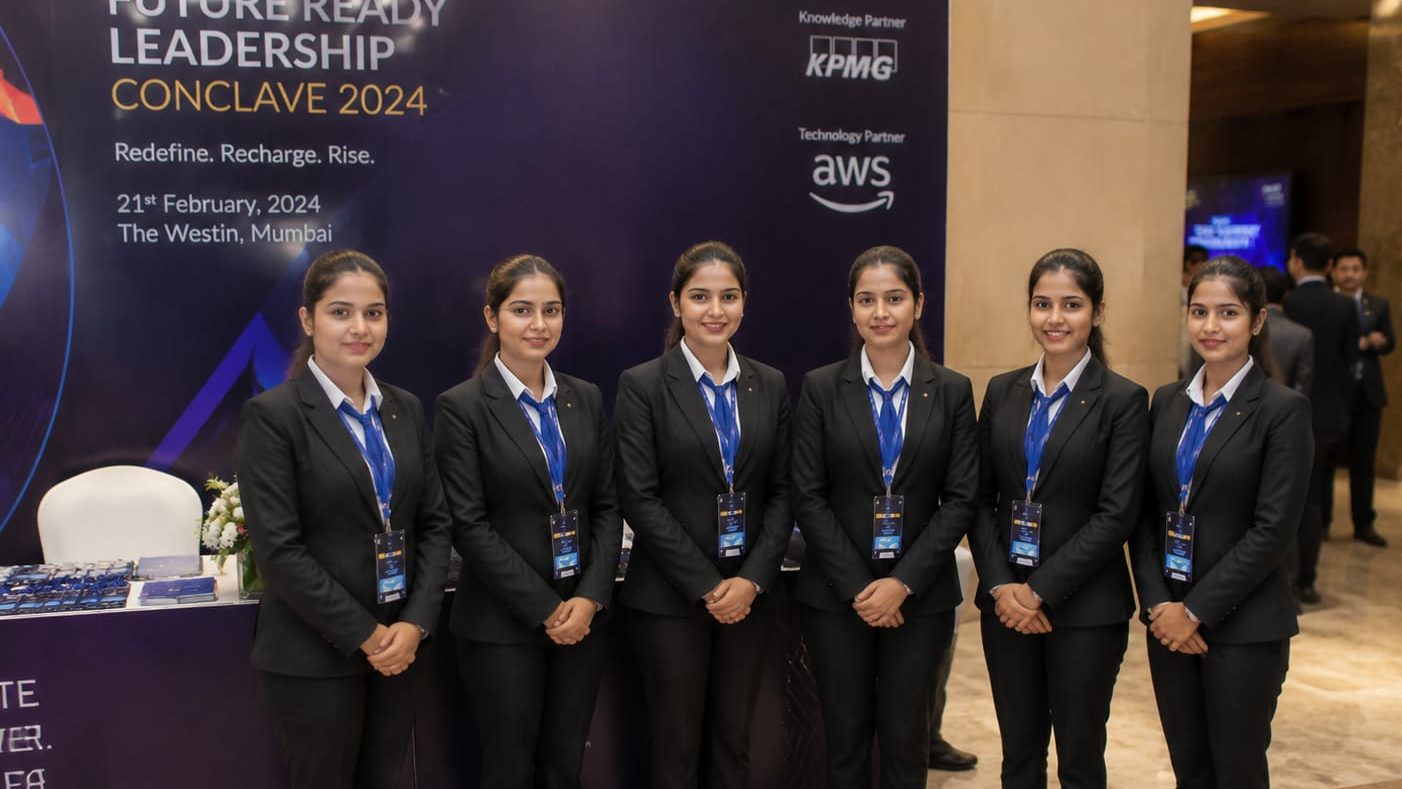
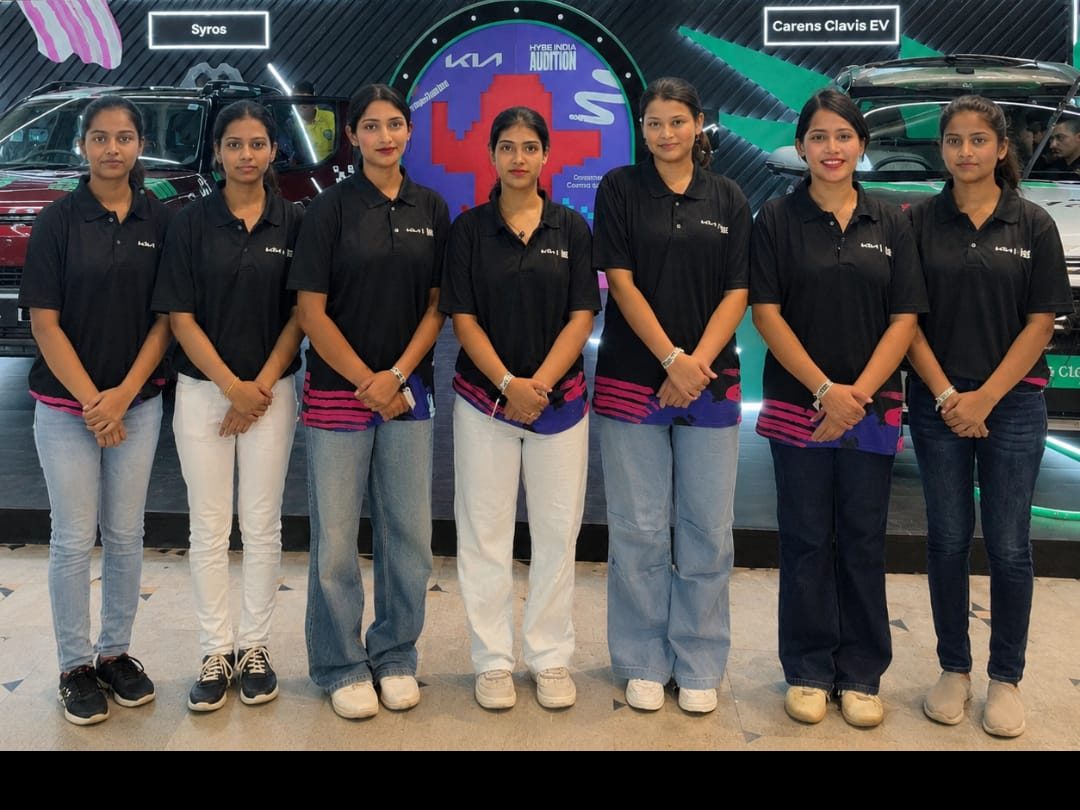
The result is that you can accept the brief without accepting the risk of fixed payroll. Your delivery team keeps the client relationship and the creative; the manpower partner keeps the people problem, whether that means registration desk teams, hospitality staff or a multi-city crew of event crew.
- Crew sourced and verified per event
- Headcount flexes up and down with the pipeline
- Briefing and uniform handled to an agreed standard
- One point of contact per city, not a phone tree
- Replacement cover included rather than negotiated
The core problem: fixed crew, variable demand
Event work is seasonal and lumpy. A single agency can be quiet in one month and short of fifty staff the next, and there is no version of permanent hiring that tracks that curve efficiently.
If you hire for the peak, you carry idle cost through the trough. If you hire for the average, you turn down work or deliver it short-staffed, which damages the client relationship you spent years building.
Outsourced manpower converts that fixed cost into a variable one. You pay for crew when you deploy them, and the bench sits with the partner rather than on your balance sheet. That is the entire commercial case, and it is a strong one for agencies running three or more projects a quarter.
Where agencies lose margin on freelance rosters
Most agencies start with freelancers and a WhatsApp group. It works at small scale and quietly erodes margin as volume grows, because the coordination cost is never invoiced to anyone.
Someone on your team is chasing confirmations, collecting ID documents, re-briefing each person individually, replacing no-shows and managing the floor on the day. That is a recruiters' and coordinators' workload sitting inside a delivery role.
The table below sets out where that time goes and what changes when a manpower partner owns it. None of it shows up on an invoice until it becomes a problem, and then it shows up as a delivery manager spending two days on confirmation calls, or as a client who notices crew arriving without a consistent uniform standard.
| Task | With a freelance roster | With an outsourced manpower partner |
|---|---|---|
| Sourcing for a new city | Start from zero each time | Bench already in place |
| Verification and documentation | Collected project by project | Handled before deployment |
| Briefing | Repeated for each individual | Standard written brief plus on-site walkthrough |
| No-show cover | Your team solves it on the morning | Bench replacement sent briefed |
| Uniform consistency | Policed by your delivery lead | Managed to an agreed standard |
| On-site supervision | Your project manager absorbed into the floor | Named coordinator reports to you |
What to outsource and what to keep in-house
Outsourcing works best when the boundary is clear. Agencies that outsource the wrong things end up paying for coordination twice and losing control of the client experience.
Keep strategy, creative, client relationships, budgeting and the event design. Keep the run-of-show ownership and the final say on staffing numbers.
Outsource recruitment, verification, briefing delivery, uniform issue, attendance management and on-site crew supervision. Those are operational functions with a repeatable process, and they are exactly what a manpower partner runs at volume. Write that boundary into the agreement so both sides know who owns which decision on event day.
- In-house: client relationship and commercial ownership
- In-house: creative, design and run-of-show
- In-house: final approval of headcount and roles
- Outsourced: sourcing, screening and documentation
- Outsourced: briefing, uniform and deployment discipline
- Outsourced: replacement cover and on-site crew supervision
White-label supply and brand-facing crews
When you deploy a partner's crew, they represent your client's brand. That needs to be stated plainly and built into the agreement: who wears what, who speaks to the client, and who handles an on-site issue.
The working model is straightforward. The partner's crew work under your direction, your project manager remains the client-facing lead, and the partner's coordinator manages the crew. The client sees one team.
Brief the partner on any confidentiality requirements as well. Client names, product details and launch plans should not travel beyond the people who need them, and that rule should be written into the crew brief rather than assumed. Agree in advance how the crew introduces themselves when a guest asks who they work for, so nobody improvises an answer on the floor.
Scaling into new cities without opening offices
Geographic expansion is where freelance rosters break first. You can move a trusted lead to another city, but you cannot move forty crew, and local sourcing takes weeks you do not have.
A partner with live coverage absorbs that. You deliver the brief, they deliver the crew, and your team arrives for the event rather than for a two-week recruiting exercise.
EventEdge Staffing is headquartered in Bengaluru with live coverage in Chennai, Mumbai, Delhi, Hyderabad and Kerala, and is expanding into Kolkata, Pune and Goa. For agencies, the practical test is simple: ask for crew in the city where your next brief is, and see whether the answer is a firm commitment or a hopeful maybe. Ask for a specific number of crew per role, not a general assurance of coverage.
Briefing and quality control when you are not on site
The hardest part of outsourcing is trusting a crew you have not met. That trust is built on documentation, not on assurances.
Ask for the briefing format before you commit. It should cover venue access, reporting time, role description, dress code, guest-facing standards and the escalation path. Then ask what evidence you receive after the event: attendance records, a coordinator's report, and photographs from the deployment.
If you are running a multi-city rollout, nominate one person on your team to audit the first city in person. Fix the briefing there and the model carries to the rest.
- Written brief template shared before the first event
- Attendance and reporting format agreed up front
- Coordinator's post-event report expected, not optional
- Deployment photographs provided for client reporting
Commercial structure: what to ask for
Ask for pricing mapped to roles, headcount, shift length and days, not a single blended rate. Blended rates hide the fact that a host, a valet and an event crew member are different products.
Clarify what sits inside the rate: uniform, on-site supervision, replacement cover, and any travel or outstation cost for multi-city delivery. Ambiguity here becomes a variation request halfway through a project.
Then ask how quickly the partner can respond to a new requirement. EventEdge returns itemised quotations typically within two working hours, subject to receiving complete event requirements, and holds 24-hour deployment capability for short-notice work.
A final commercial point: agree how a change in scope is handled. Event requirements move, and adding six crew the day before a show should be a phone call rather than a renegotiation. Confirm how short-notice additions are priced and how quickly they can be confirmed, because that is the moment your own client is waiting on an answer.
Choosing a manpower partner you can scale with
Test the partner on a single event before you hand over a rollout. Give them a requirement with a real peak, an awkward reporting time and a genuine replacement risk, and watch how they handle it.
Then evaluate four things: whether the crew arrived briefed, whether the uniform was consistent, whether the coordinator was reachable, and whether the reporting arrived when promised. Those four signatures predict how the relationship will scale.
EventEdge deploys crews from 5 to 500 staff and works with event agencies, corporate event teams, exhibition organisers and brand activation teams as an extension of their delivery team rather than a competitor to it. Send the brief and we will tell you honestly what can be delivered, in which cities, and by when.
Frequently asked questions
Why would an event agency outsource manpower instead of hiring?
Because event demand is lumpy. Outsourcing converts a fixed payroll cost into a per-event variable cost, so the agency can accept briefs in peak months without carrying idle crew through quiet ones.
Does outsourcing event manpower reduce our margin?
It removes the hidden coordination cost of chasing confirmations, re-briefing individuals and covering no-shows. Price your delivery with those hours included and the comparison usually favours a partner.
Can outsourced crew work under our brand?
Yes. Crew are deployed under your direction, to your uniform and guest-facing standards, with your project manager remaining the client-facing lead and a partner coordinator managing the crew.
Can you supply crew in cities where we do not have an office?
EventEdge is headquartered in Bengaluru with live coverage in Chennai, Mumbai, Delhi, Hyderabad and Kerala, and is expanding into Kolkata, Pune and Goa.
How do we control quality if we are not on site?
Agree the written brief template, attendance reporting, a coordinator's post-event report and deployment photographs before the first event, and audit the first city of any rollout in person.