The short answer: yes, when the requirement is specific
A last-minute staffing requirement can be handled, but only when the requirement is specific. A staffing partner needs the date, city, venue, reporting time, roles, headcount and dress code before anyone can be assigned to your event. A vague request creates delay; a complete one-page brief creates a deployment.
EventEdge works to a 24-hour deployment capability with more than 100 professionals on call, so same-day and next-day requirements are assessed against live bench availability rather than a long fixed lead time. How long it actually takes depends on the role mix, the city and the number of people you need. That is why the requirement is read before any commitment is made.
This guide covers what to send, what happens in the hours that follow, which roles absorb short notice, and where last-minute staffing usually breaks.
Why last-minute staffing requests fail
Most short-notice failures are information problems, not availability problems. A request that arrives as twenty hostesses on Saturday cannot be priced, briefed or staffed without knowing where, when, in what uniform and doing exactly what.
The second failure is role definition. A host, a promoter, a registration executive and a hospitality staffer are different jobs, with different skills, different rates and different briefing needs. Leave the role open and the crew that arrives is a guess.
The third is access. Venue permissions, gate passes, parking and reporting points take time to arrange. If nobody on the client side is reachable on the day crew must be confirmed, the schedule slips by hours, not minutes.
- One named contact on the client side, reachable on event day
- A written requirement rather than a phone summary
- A confirmed reporting time, not a rough arrival window
- A uniform decision made before crew are assigned
What to send in the first message
You can put everything a coordinator needs into one message. It does not need to be formal or well formatted. It needs to be complete.
If the headcount is still moving, say so. A range is workable; silence is not. If a run-of-show exists, attach it. The difference between a 900-guest award night and a 900-delegate conference sits in front-of-house behaviour, and that comes from the run-of-show rather than the guest count.
Send it through WhatsApp or the quote page and an itemised quotation is typically returned within two working hours, subject to receiving complete event requirements. Speed comes from completeness, not from chasing.
- Event type, date and duration
- City, venue and the exact reporting point inside it
- Headcount and the role required for each group
- Reporting time and shift end
- Dress code or uniform standard
- Language requirements and guest profile
- Site contact name and phone number
- VIP, media or sponsor-zone instructions
What happens in the first 24 hours
Once a complete requirement is read, the work runs in a fixed sequence. A request that arrives at 6pm for a 7am reporting time is read in exactly the same order as one that arrives three weeks out. Skipping a step to save an hour is how a no-show appears at the venue gate.
The sequence matters more at short notice, not less. Each stage depends on the one before it. Nothing is skipped, only compressed, and the single stage that is never dropped is the briefing.
Availability is checked against a live bench rather than a static contact list. More notice does not automatically buy a better outcome, but it buys choice: more senior crew, more role options and more time to brief them properly. Choice, not speed, is what notice actually buys.
| Stage | What gets confirmed |
|---|---|
| Requirement review | Role mix, shift pattern and headcount against bench availability |
| Availability check | Crew matched by role, language and city |
| Quotation | Itemised per role and per day, sent for approval |
| Confirmation | Names locked, reporting time and dress code issued |
| Briefing | Venue notes, role cards and escalation path delivered |
| Deployment | Crew report early with a coordinator on site |
Which roles absorb short notice best
Some roles take short lead times better than others because the skill requirement is general and the briefing is short. These are the roles to lean on when the clock is against you.
Roles that carry your brand voice need more lead time: hosts and anchors, VVIP handlers and specialist promoters. They can still be deployed at short notice, but they are the hardest to substitute mid-event if the brief is thin. If the stage script is your critical path, look at hosts and anchors separately from general crew.
Be clear about which roles matter most. If the programme depends on one host, protect that role first and let the support roles scale around it.
- Registration desk teams - script-driven work that trains quickly
- Ushers and crowd marshals - position-based roles driven by a strong briefing
- Volunteers and general event crew - logistics, stage and last-mile support
- Hospitality staff - where the service standard is already familiar
- Valet crew - subject to local driving and parking requirements
Where last-minute staffing breaks
The failure points are predictable. Registration queues build when counters are under-staffed for the peak arrival window. Valet backs up onto the access road when arrivals concentrate into twenty minutes. VVIP handling fails when nobody has been told who is arriving and when.
Each of these is a planning problem rather than an effort problem. Adding crew at 7pm does not fix a counter that should have been doubled at 6pm, and it does not unblock an access road.
Model the arrival curve first, then staff to the peak rather than to the total guest count. Adding headcount after a queue has formed splits the queue, it does not clear it. If you need the underlying ratios, read how many staff do you need for an event before you confirm headcount.
Briefing at speed
With no time for a long induction, the briefing has to be compressed rather than dropped. Five items cover most of it: where to report and at what time, what the role does hour by hour, what to wear, who to escalate to, and what the guest-facing standard is.
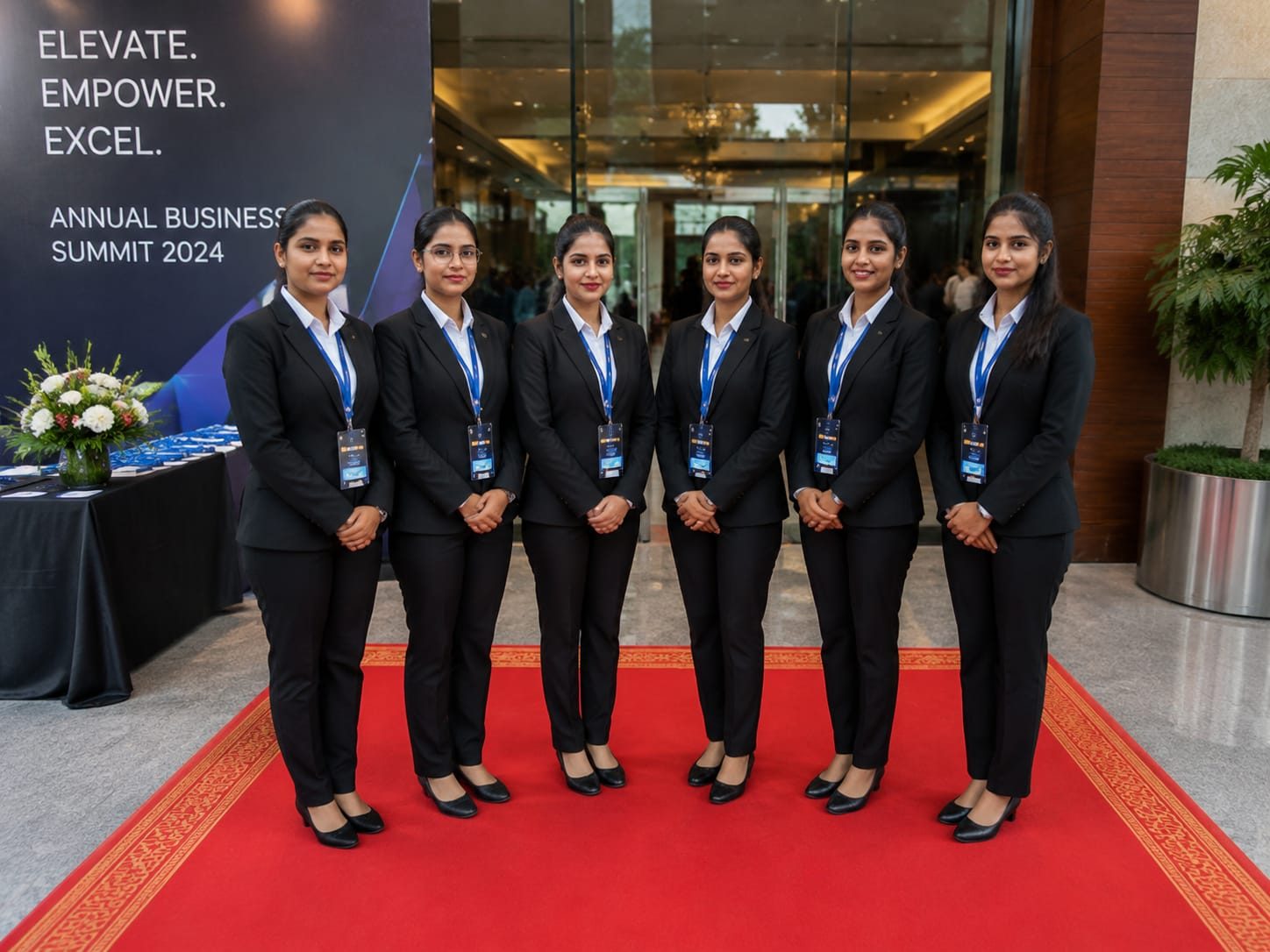
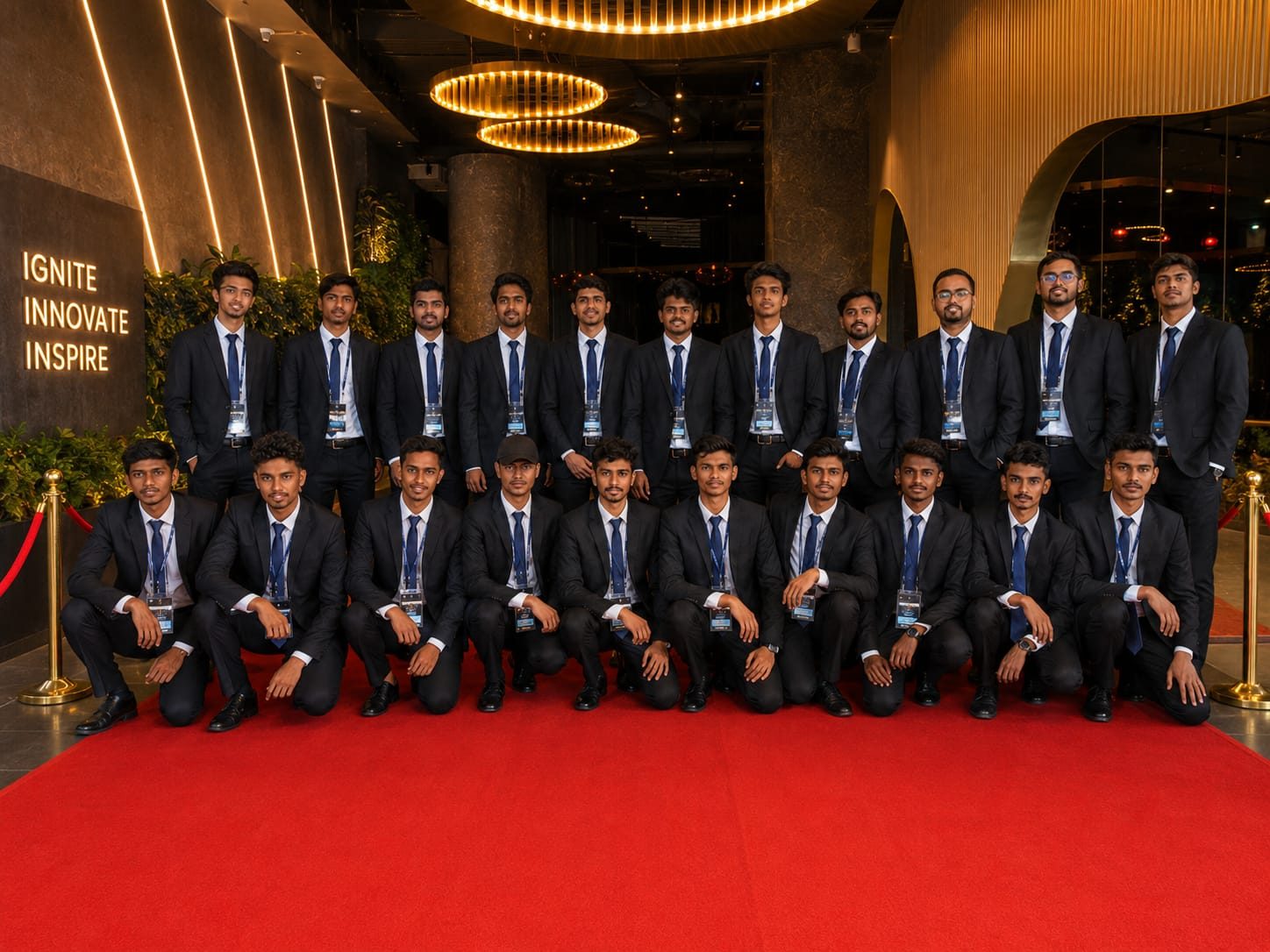
EventEdge briefs every crew before deployment - venue notes, role cards, dress code and the escalation path - so event day starts with execution rather than explanation. At short notice that briefing is delivered faster and in a shorter format, but it is never skipped.
- Venue note with the exact gate and reporting point
- Role card with the hourly task list
- Dress code with photographs of the approved uniform
- Escalation path with real names and numbers
- Approved answers to the three most likely guest questions
The bench is what makes a short-notice answer possible
A staffing partner can only answer a short-notice request if people are already recruited, verified and used to working to a briefing standard. A bench of 100+ professionals on call across Bengaluru, Chennai, Mumbai, Delhi, Hyderabad and Kerala is what turns a same-day enquiry into a real option.
Coverage in Kolkata, Pune and Goa is being built now. For those cities, short-notice requests are described honestly as a developing capability rather than an established one.
Before you rely on any partner in a crisis, ask two questions: how deep is your bench for this role in this city, and who is my named coordinator if something goes wrong on site?
- Bench depth for the role, in the city, on that specific date
- A named coordinator, not a general helpline
- A replacement process that does not depend on your team
How to stop being last-minute next time
The best defence is to appoint a staffing partner before the event is confirmed, not after. Once a partner already holds your role templates, uniform standard and venue preferences, a short-notice request becomes an update rather than a new project.
Keep a standing brief for recurring events: the roles you always use, the headcount range, reporting times and the dress code. When a date moves or a client adds 200 delegates, you send the delta instead of starting from zero.
If you want to see how the coordination model works before you deploy it, review how it works and then speak to us when you have a live date or a live problem.
- Appoint the partner before you win the work
- Keep a reusable role and uniform template
- Pre-agree the escalation path and site contact
Frequently asked questions
Can you staff an event within 24 hours?
EventEdge works to a 24-hour deployment capability, with 100+ professionals on call. Whether a specific requirement can be met depends on the role mix, the city and the headcount, so the requirement is assessed against bench availability before a commitment is made.
What details do you need for a last-minute staffing request?
Event type, date, city, venue and reporting point, headcount with the role for each group, reporting time and shift end, dress code, language requirements and your on-site contact number.
Which cities can you staff at short notice?
Live coverage is in Bengaluru, Chennai, Mumbai, Delhi, Hyderabad and Kerala. Kolkata, Pune and Goa are being built out, and requests there are treated as a developing capability.
Which roles are easiest to fill at short notice?
Registration desk teams, ushers, crowd marshals, volunteers and general event crew absorb short lead times best. Hosts, anchors, VVIP handlers and specialist promoters need more protection because they carry your brand voice.
How is short-notice staffing priced?
Pricing depends on the role, the city, the shift length and how much briefing and supervision the event needs. Send the requirement and you will receive an itemised quotation, typically within two working hours subject to receiving complete requirements.
Can you replace a crew member who does not report?
Yes. Replacements come from the bench, so the person arriving has already been briefed to the same standard rather than learning your event at the gate.