Brand activation staffing checklist: what has to be right
A brand activation staffing checklist covers five things: the objective the crew is working towards, the role mix on the floor, the product conversation each promoter must be able to have, the uniform and brand standards, and the shift plan that keeps energy up for the full activation window.
Get those right and a modest crew outperforms a large, unbriefed one. Get them wrong and you pay for a crowd of people standing behind a counter looking at their phones while footfall walks past.
The checklist below is written for mall activations, retail and BTL stands, product demos and roadshows. It applies the same way whether you are running one location or a multi-city rollout.
- Activation objective written down and shared with the crew
- Role mix defined: promoter, host, marshal, coordinator
- Product conversation scripted and rehearsed
- Uniform, grooming and badge standards issued in advance
- Shift rotation and break plan built before day one
- Reporting format agreed for daily activation numbers
- Escalation path for stock, safety and venue issues briefed
Start from the activation objective, not the headcount
Headcount should be the last decision, not the first. Decide what the activation is actually for: raw footfall into the stall, product sampling volumes, demo bookings, app installs, test drives or qualified leads. Each objective needs a different crew shape.
A sampling activation needs brand promoters who can approach strangers quickly and keep the stand stocked. A demo-led activation needs fewer people who can run a two-minute product explanation without losing the thread. A lead-capture activation needs staff who can qualify a visitor in three questions rather than pitching everyone equally.
Write the objective in one sentence and put it on the briefing card. Every promoter should be able to repeat it.
- Footfall and stall visits: greeting-led crew, high approach rate
- Sampling: fast handover, stock discipline, hygiene standards
- Demo or trial: fewer, better-trained product presenters
- Lead capture: qualifying questions and clean data entry
- Event coverage and PR: hosts and anchors plus media coordination
The roles on an activation floor
Most activations only need four or five role types, and confusing them is a common planning error. A promoter who is also expected to manage queues, capture data and control stock will do all four badly.
Below is the role split that works on mall and retail activations, and how many people typically carry each position.
On larger formats the roles come from separate specialist teams, but they should still report to one on-site coordinator. Assign names to positions before the activation day rather than on the morning; when every promoter knows which role they hold, who they hand over to at break and who they escalate to, the stand runs without anyone chasing instructions. Review the role sheet after day one and move people to where they performed best.
| Role | What they own | Typical crew share |
|---|---|---|
| Brand promoter | Approach, product conversation, demo or sampling | Largest group on the stand |
| Host or anchor | Stage, announcements, emcee duties, crowd build-up | One per activation or stage |
| Crowd marshal | Queue lines, aisle flow, safety around the stand | Two or more at high-footfall locations |
| Lead capture staff | Qualifying questions and clean data entry | One per data device or tablet |
| Activation coordinator | Roster, breaks, stock calls, venue liaison | One per location |
Briefing promoters on the product conversation
Promoters are not product experts and should not be treated as such. What they need is a short, repeatable conversation: an opening line, three product points, one proof point, and a clear close such as a demo booking or a sample handover.
Run the briefing as a rehearsal, not a lecture. Ask each promoter to deliver the conversation once before deployment and correct it on the spot. Twenty minutes of practice prevents a full day of improvised pitching.
Include the objections they will actually hear: price, availability, competitor comparisons, and the visitor who says they are only browsing. Give them an approved answer for each and a rule about what not to promise. Keep those approved answers on the briefing card, so nobody has to recall them from a morning meeting.
Uniform, grooming and brand standards
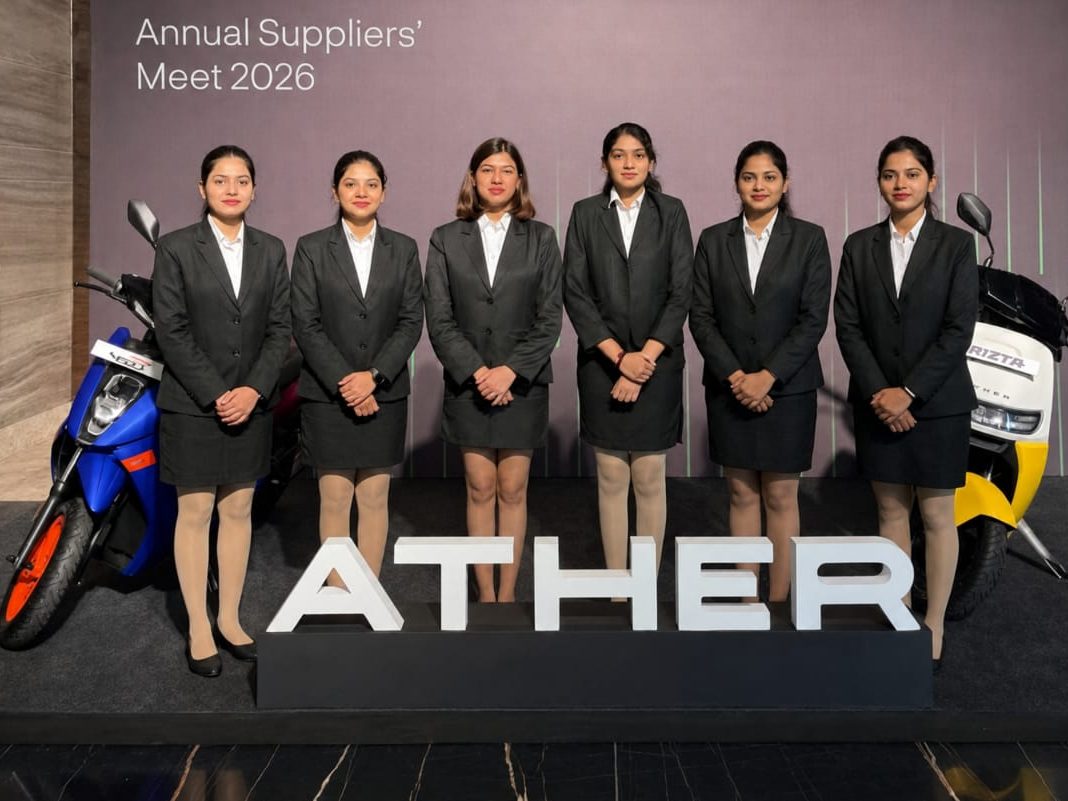
At an activation, the crew is the brand. Uniform consistency is not a styling preference, it is the difference between looking like an organised rollout and looking like hired help.
Issue the standard in writing before the activation: the exact garment, colour, footwear, grooming expectations, badge placement and what happens if a crew member arrives out of standard. Confirm sizes during onboarding so nobody is negotiating a t-shirt on day one.
Where the client supplies branded apparel, collect it early, check sizes against the confirmed roster, and assign one person to manage the kit at the venue. Missing shirts on morning one cost more time than the whole uniform budget.
- Uniform standard confirmed in writing before deployment
- Sizes collected during onboarding, not on event day
- Branded kit held and tracked by one named person
- Grooming and footwear rules stated plainly
- Backup kit for replacements and late additions
Footfall, dwell time and crowd flow
A crowded stand is not automatically a successful one. If visitors cannot reach the counter, the activation converts poorly no matter how many promoters are on the floor.
Plan the approach geometry before the crew arrives. Place one promoter out front to pull footfall in, one at the counter to handle the interaction, and keep a clear walking channel so mall traffic continues to move. Blocking a walkway gets stands shut down by venue management.
Where the stand sits near a narrow aisle, add crowd management support. Queue lines should be marked and staffed, and the marshal's job is to keep both the visitors and the passers-by moving.
Track two numbers during the activation: how many people approach the stand, and how long they stay. Approach rate tells you whether the front-of-house pull is working; dwell time tells you whether the product conversation is holding attention. Both are easy to estimate with a simple hourly count, and both point to a specific staffing change rather than a general note that the stand needs more people.
Sampling, demo and data capture
Sampling and demo activations live or die on logistics, not on charm. Stock must be counted at the start and end of every shift, stored hygienically, and replenished before it runs out rather than after.
For demos, brief the promoter on how many people can be handled at once and where the waiting visitors go. An unmanaged demo queue becomes a crowd, and a crowd becomes a venue complaint.
Data capture needs its own discipline. One person owns the tablet or device, entries are checked for completeness at the end of each shift, and visitor consent is taken the way your brand team has approved it. Poorly captured leads are worse than no leads, because the follow-up team pays the price later.
- Stock counted at shift start and close
- Replenishment triggered before stock-out
- Demo queue managed with a defined waiting area
- One owner per data device, checked each shift
- Approved consent process followed for every entry
Shift rotation, breaks and reporting
Promoter energy is a measurable resource. The same person who is sharp at hour one is often flat by hour seven, especially on a standing mall shift with amplified noise around them.
Build a rotation so that no promoter stands in the same position for the entire day. Move people between approach, counter and stock duties, and schedule breaks so the stand is never understaffed while one group is away.
End every shift with ten minutes of reporting: visitors engaged, samples distributed, leads captured, issues encountered. Collect it verbally on site so nothing depends on paperwork arriving after the activation has ended. Whoever takes that report should own closing the loop on issues, so the crew sees that reporting changes the plan for the next day rather than disappearing into a notebook.
Scaling activations across venues and cities
A single activation can be staffed with a small hand-picked crew. A rollout across malls, cities and weekends cannot. The moment you run three locations on the same weekend, the briefing and attendance discipline become the constraint.
Standardise the reusable parts: one role sheet, one briefing deck, one reporting format, one uniform standard. Then the only thing that changes per city is the roster and the venue notes.
EventEdge Staffing runs brand promoter, hosts and crowd management crews for activations from 5 to 500 staff, with live coverage in Bengaluru, Chennai, Mumbai, Delhi, Hyderabad and Kerala. Send the activation dates, cities, venues and daily timings and you will receive an itemised quotation, typically within two working hours subject to complete requirements.
Frequently asked questions
How many promoters do I need for a mall activation?
Size it from the objective and the footfall pattern. As a starting structure, use one promoter pulling footfall, one on the counter, one managing queue or stock, plus a coordinator across locations. Scale up only where the approach rate is the bottleneck.
What should a promoter briefing cover?
The activation objective, the role of each position, the approved product conversation, the objections they will hear, the uniform standard, the reporting format and the escalation path for stock, safety or venue issues.
Can promoters handle data capture as well as product conversations?
They can, but only if data capture is assigned to a specific position rather than added to everyone's role. Mixing both across the whole crew usually produces incomplete leads and slower conversations.
Do you supply uniformed promoters for activations?
Yes. Crew are deployed to a consistent uniform standard agreed before the activation, and branded apparel supplied by your team is collected, size-checked and managed on site.
Which cities do you cover for brand activations?
EventEdge is headquartered in Bengaluru with live coverage in Chennai, Mumbai, Delhi, Hyderabad and Kerala, and is expanding into Kolkata, Pune and Goa.